


Extruded
Counting The Plastic Shower Bottles: A SOLID Bar Program Removes From A Mid-size Hotel
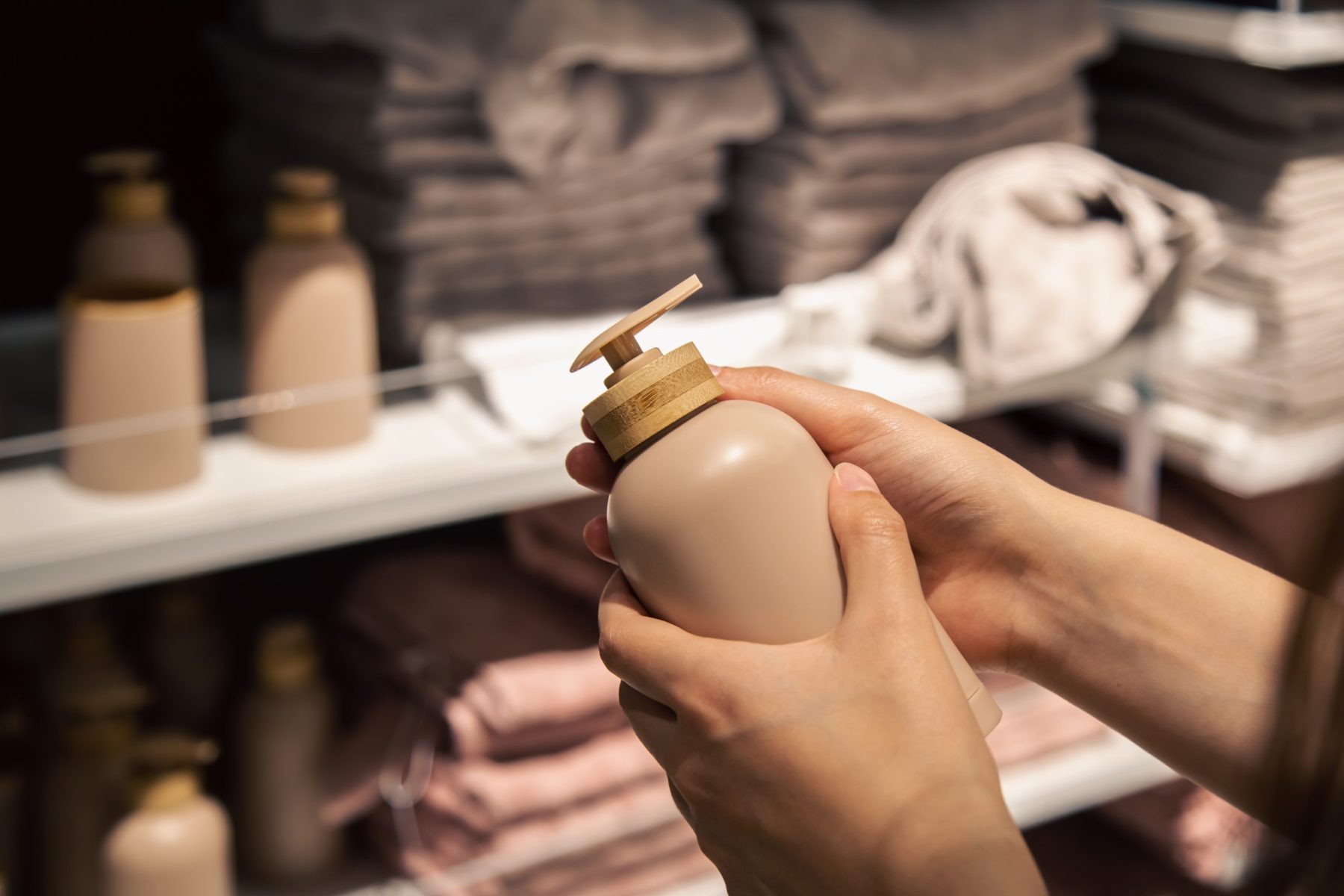
Walk into almost any bathroom on a property, and you will find the same lineup: a row of little plastic minis by the sink or clipped into the shower caddy. They look harmless. One stay, a few empties, into the bin they go. Multiply that quiet moment by every occupied night across a full year, though, and the figure stops looking trivial at all. The same vessels show up across hospitality, and plenty of hotels barely notice the outflow until it is all laid end to end.
This piece does the arithmetic that most sustainability pages skip. Not the slogans, the actual yearly tally for a property of average size, and what a move to pressed bars takes off that number. We run a contract floor that presses gentle syndet cleansing bars and solid conditioners at up to 35,000 bars a week, with first runs starting at 5,000, so the figures here come from real order sheets rather than press releases. Hospitality work has shown us where the count hides, on the cart and the dock, not the spreadsheet.
Quick Answer
A 150-room hotel at about 65% occupancy gets through roughly 107,000 single-use shampoo, body wash, and conditioner bottles a year. Moving to solid cleansing and conditioning bars eliminates nearly all of them while trimming freight, storage, and waste costs.
At a glance:
- Pressed bars carry no liquid bottle at all, so a solid switch displaces close to the entire count.
- Two states already restrict the minis by law, which moves this from a nice-to-have into near-term planning.
Key terms, defined
- Mid-tier hotel: a property of roughly 75 to 200 guestrooms, above a boutique inn and below a large convention house.
- Solid amenity program: swapping liquid shower minis for solid cleansing and conditioning bars, with nothing to bin afterward.
The Volume Problem Hiding in Plain Sight
Here is what nobody tallies at the front desk. A single empty in a single shower is a rounding error. The real trouble is repetition. Busy hotels feel this most, but even a steady mid-tier house runs the same loop. Occupied rooms turn over, housekeeping resets the tray, and a fresh set heads out the door with every checkout. Over twelve months, that churn becomes a freight headache, a budget line item, and, increasingly, a compliance question.
Why do the minis stack up faster than anyone expects
A handful of everyday habits drive the accumulation:
- Most showers hold three separate vessels: shampoo, conditioner, and body wash, which triples the tally per stay.
- Partly used minis rarely get topped up; they get tossed and swapped for sealed ones.
- Longer stays often trigger a daily refresh even when the visitor barely touched yesterday’s set.
- Items walk, since some travelers pocket the leftovers, which staff then restock.
- Sealed-for-hygiene expectations push crews to swap rather than reuse.
What actually ends up in the dumpster
The waste stream is not only the plastic shell. It also carries:
- Liquid product left inside, often a third or more of each vial.
- Mixed materials, since pumps, caps, and labels separate poorly during sorting.
- Shrink wrap and tray liners that show up with every case delivered.
None of that surfaces on a comment card. It surfaces on the invoice and, eventually, in the inspection notes.
Running the Numbers for a Mid-Tier Property
So what is the real figure? Let me build it openly, with assumptions you can argue with and tune to your own floor. Treat it as a worked example, not a decree; your housekeeping rhythm could push the total either way.
The assumptions on the table
For this worked example, I will use:
- A 150-key establishment, squarely in mid-tier territory for the United States.
- Average annual occupancy is near 65%, close to the long-run national norm.
- Three single-use shower vessels are consumed per sold night.
- A full calendar year, 365 nights of potential turnover.
- No allowance for extra minis handed out at the front desk on request, which would only lift the tally.
The annual math, step by step
Working it through:
- Keys multiplied by nights: 150 times 365 gives 54,750 available key-nights.
- Apply 65% occupancy: about 35,600 of those nights actually get sold.
- Three vessels per sold night: 35,600 multiplied by three.
- That amounts to nearly 106,800 single-use shower bottles over the year.
- Round it sensibly, and you are looking at roughly 107,000 minis annually.
Seen as a table, the buildup is hard to wave away:
| Input | Figure used in this example |
| Rooms | 150 |
| Average occupancy | 65% |
| Sold room-nights per year | ~35,600 |
| Single-use shower bottles per sold night | 3 |
| Yearly count a solid switch can displace | ~107,000 |
Adjust any one input and the headline moves, yet the order of magnitude holds: six figures, every twelve months, from one average address.
How the tally moves as the property grows
The same model scales cleanly. Hold occupancy at 65% and three vessels per sold night, then swing the key count:
| Rooms | Mini bottles per year |
| 100 | ~71,000 |
| 150 | ~107,000 |
| 200 | ~142,000 |
| 300 | ~214,000 |
A 300-key house roughly doubles the mid-tier figure, so larger properties feel the freight and storage gains first.
Where Pressed Bars Change the Equation
A liquid mini and a pressed bar both clean hair. What separates them is everything around the cleaning: the vessel, the freight, the leftovers, the bin. Swap the format, and most of that supporting cast disappears.
One bar, several vessels retired.
A solid set does the work of the plastic lineup it stands in for:
- A single cleansing puck covers what a shampoo mini and often a body-wash mini did before.
- A companion piece handles conditioning, and solid conditioner bars can fold a rinse-out step into the same compact form.
- No pump, cap, or inner seal rides along with it.
- Spent pieces shrink to nothing usable, so there is no half-full container left to discard.
What does “displaced” really mean for a sold night?
Translate the yearly figure back to a single stay, and it gets tangible. Each sold night that once sent three vessels to the curb now sends none.
The per-stay picture
On a typical two-night stay:
- The old setup: up to six small vessels cycled through and binned.
- The bar setup: two or three solid pieces, with no shell at all.
- Housekeeping resets fewer items and stocks a flatter, lighter tray.
- The bathroom reads as considered rather than cluttered.
The per-year picture
Scaled across the example property:
- The 107,000 figure from earlier is the volume a bar program lifts off the table.
- Freight drops because bars ship dense and dry, with no water weight.
- Storage frees up, since one case of bars holds far more uses than a case of liquids.
- Reorder frequency declines, easing the back-office load.
Past the Headcount: Cost, Rules, and the Guest Read
The regulatory clock is already running
This is no longer only a values call. Two states have written the minis out of the rulebook. California’s AB 1162 statute bars lodging hotels from putting personal-care minis of six ounces or less in sleeping rooms, with larger houses already covered and smaller ones close behind. Washington’s Department of Ecology guidance sets a parallel restriction arriving later this decade, backed by daily fines for stragglers. The push is not arbitrary: plastic containers and packaging are the single biggest category of plastic in the country’s municipal trash, per federal waste data, and that backdrop keeps the rules coming.
The near-term map looks like this:
- California, larger houses: restrictions have been in place since January 2023.
- California, 50 keys or fewer: live since January 2024.
- Washington, 50-plus units: restriction effective January 2027.
- Washington, smaller establishments: effective January 2028.
Cost and storage realities
Money tends to settle a debate faster than principle does. For most hotels, and really across hospitality, the format swap touches several lines at once:
- Per-use cost often falls once you stop paying to ship water weight.
- Warehouse footprint shrinks, freeing shelves for linen or paper goods.
- Labor eases, with fewer fiddly items to stage on each cart.
- Lost product drops, since a bar gives nearly all of itself before it is spent.
- Disposal volume contracts, which can soften the waste-hauling charge.
What do guests actually make of it?
The worry is always the same: will travelers feel short-changed? Travelers notice amenities more than managers assume, yet the evidence from properties that have switched is reassuring, with one caveat: quality has to be there.
- Premium bars in a clean dish read as an intentional upgrade, not a cut corner.
- Most travelers never mention the change when the product performs.
- Eco-minded bookers increasingly treat the gesture as a reason to pick you.
- The few who still want a liquid mini can be handed one on request.
In our experience, the pushback that managers brace for rarely shows up; the quiet is the signal that the swap landed.
Making the Switch Without the Guesswork
Knowing the number is one thing. Moving 150 units onto a fresh format without rattling housekeeping is another, and less dramatic than it sounds when the rollout is staged sensibly.
A rollout that respects the housekeeping floor
A sequence that tends to hold up:
- Pilot one floor or unit type first, gather crew feedback, then widen.
- Time the changeover to standard turnovers so no revenue night is disrupted.
- Brief the front desk on the on-request option for anyone who asks.
- Add a short in-room card explaining the choice; it noticeably lifts reception.
- Track empties for a month to confirm the projected drop against reality.
Questions worth asking a manufacturer
Before you commit to a purchase order, press your maker on the practical points:
- What is the minimum first run, and how quickly can they repeat it?
- Can the bar geometry sit in your existing tray or dish?
- Is the cleansing base pH-balanced and gentle enough for daily use?
- What scent and branding options exist, debossed or wrapped?
- How is each bar protected in transit so it arrives intact?
- Can they scale with you if a second house comes online later?
A quick note on terminology
One clarification worth flagging. A bar marketed purely for cleansing and a syndet bar built from synthetic detergents sit under different regulatory definitions, and neither should carry a treatment claim it cannot back up. A straight-talking maker keeps your labeling honest, which protects both you and the environmental story you tell guests.
Frequently Asked Questions
How is a mid-size hotel defined in the United States?
There is no single legal threshold, but most operators and analysts treat properties in the roughly 75- to 200-key range as mid-tier, sitting between boutique inns and large convention houses. Brand classification, service level, and local market all factor in, too. The 150-key figure used in the calculation above lands near the middle of that band, which makes it a fair stand-in for a typical full-service or upper-midscale address when you are estimating annual consumption of any single-use item.
Are hotel toiletry minis being banned outright?
Not nationwide, and not as a blanket rule. The measures are state-level and target small personal-care containers in lodging, not every format. California restricts them now, Washington follows in 2027 and 2028, and comparable laws have passed in New York and Illinois. A request-based exception usually remains, so a guest who asks can still receive an individual item at the desk. Solid bars sidestep the issue entirely, since they sit outside the small-container definition these laws single out.
Do solid cleansing bars perform well in hard-water areas?
Performance hinges on the base. Traditional tallow or vegetable soap can react with mineral-heavy water and leave a faint film, which is where some visitors form opinions. Synthetic detergent formulas behave differently; they lather and rinse cleanly across a wide range of water profiles, including the hard water supplies common in parts of the Southwest and Midwest. If your region runs hard, ask your maker to work around it. A good chemist tunes the surfactant blend so rinse-off stays clean regardless of local chemistry.
How long does a single guest bar usually last?
It depends on bar weight, formula density, and how the piece is stored between uses, but a standard bar-weight cleanser typically covers somewhere between eight and fifteen showers. A drainage dish that lets it dry fully between rinses meaningfully extends its life, while a piece left sitting in standing water softens and wears down faster. For planning, many properties budget for one fresh bar per multi-night stay and find it comfortably sufficient for the average visitor.
Have any major chains already moved toward solid formats?
The largest operators led the broader pullback in plastics. Marriott committed to retiring around 500 million tiny vessels a year by moving away from single-use shower minis, and peers including IHG and Hilton announced parallel steps across hundreds of thousands of rooms. Most of those headline efforts leaned on wall-mounted dispensers rather than bars, yet the same pressure that drove them now pushes independent and mid-tier hotels to weigh pressed bars as a lower-maintenance route.
What can a property do with leftover bars at checkout?
Unused or lightly used bars do not have to go in the trash. Established nonprofits collect partially used hotel soap, sanitize and reprocess it, then redistribute fresh pieces to communities short on hygiene supplies; one well-known operator has handled millions of pieces this way. Properties usually pay a small per-key monthly fee to take part and receive impact reports in return. It is a tidy closing loop that pairs naturally with a solid format and supports broader waste-cutting goals.
Talk Through Your Property’s Numbers
Curious what the annual figure looks like for your exact key count and occupancy? We can model it with you and spec a bar set that fits your trays and your brand. Start with our custom guest amenity bars for hospitality, then review solid shampoo bars for guest rooms, and reach out for a quote tailored to your numbers.