


Solid Shampoo and Conditioner
How Spas Use Solid Shampoo and Conditioner Bars to Grow Their Retail Revenue
The global bar shampoo market was valued at roughly $11.4 billion in 2024, with projections indicating it will reach $19 billion by 2034, according to multiple industry research firms. North America accounts for the largest regional share of that figure. What does that mean for wellness businesses looking at their checkout counter? It means demand is already there, and the window for stocking these items before every competitor does the same is still open.
Solid hair-cleansing and conditioning bars are not a passing trend. They are compact, travel-friendly, longer-lasting than bottled alternatives, and they appeal to the growing segment of consumers who actively seek out plastic-free personal care products. For a wellness facility, they also present a unique merchandising opportunity that liquid bottles simply cannot match.
Below, we walk through ten practical approaches that wellness and beauty businesses are already using to turn these bars into consistent revenue drivers.
Start With the Treatment Room, Not the Shelf
The most effective way to sell any product at a wellness facility is to let the client experience it first. This is not a new idea, but it works especially well with solid bars because they are tactile and aromatic, and sufficiently unfamiliar to spark curiosity.
Instead of placing bars on a shelf and hoping somebody picks one up, integrate them into treatments. Use a conditioning bar as the finishing step in a scalp massage. Lather a solid cleanser during a pre-facial wash for clients with oily or combination hair types. When the therapist mentions the bar by name and explains why it was selected for that particular client, the recommendation feels personal rather than transactional.
- Let therapists choose which bar to use based on the client’s needs during intake.
- Note which bars were used in the client’s record for follow-up
- Place a matching full-size bar in the treatment room so the client sees it afterward
- Train staff to say one specific thing about the bar’s ingredients or origin story
Research consistently shows that clients are far more likely to purchase products they have physically experienced during a service. A 2017 study cited by the Day Spa Association found that staff resistance to selling was the single biggest obstacle to retail performance. When the recommendation comes during treatment, it doesn’t feel like a pitch. It feels like advice.
Design a Display That Invites Touch
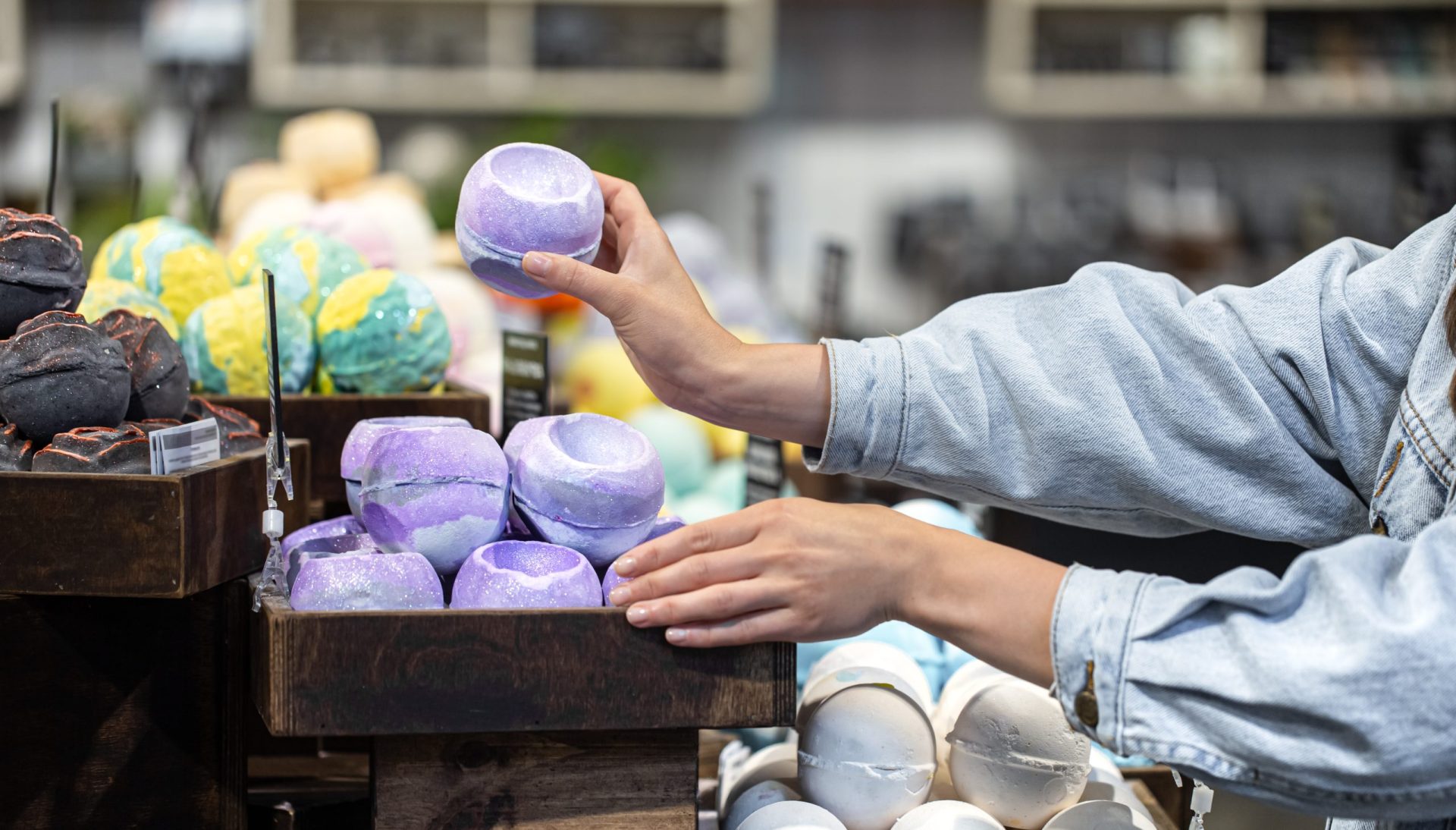
Liquid bottles sit behind glass or on a shelf. Nobody picks them up for fun. Solid bars are different. They invite interaction.
- Arrange bars on open wooden trays or stone platters where guests can pick them up.
- Group bars by purpose: hair cleansing, conditioning, body, and grooming
- Include a small card next to each group describing the formulation in plain language
- Use graduated heights in your display so the eye moves naturally across the collection
- Rotate featured items monthly to keep the area feeling fresh without a full overhaul
- Keep testers clearly labeled and provide disposable applicators for hygiene
A study published in the Journal of Consumer Research found that people who physically touched merchandise were willing to pay more than those who did not. Solid bars are the ideal format for this principle. They look interesting. They smell good. And when someone holds one, they are already halfway to buying it.
The key is giving bars enough breathing room on the display. Crowding twenty items onto a narrow shelf communicates clearance, not luxury. Three to seven items per section, with small descriptive signs that read ‘curated.’
Bundle Bars With Existing Services
Product bundling is one of the oldest selling techniques in the wellness industry, and it still works. What changes with solid bars is the price point and the novelty factor.
Consider these combinations:
- A 60-minute hair treatment paired with a take-home conditioning bar at a small discount
- A “spa night kit” that includes a shampoo bar, a body bar, and a branded tin
- A seasonal gift set featuring two to three bars in limited-edition scents
- A nail and grooming package that adds a shave bar to a manicure service
Bundling accomplishes two things at once. First, it raises the average transaction value. Second, it introduces the client to a product category they might not have considered. The discount does not need to be dramatic; even a 10% reduction on the bundle feels like a reward for buying together.
Seasonal kits deserve special attention. Holiday bundles and limited-edition collections create urgency. When a client knows the peppermint-eucalyptus bar is only available through December, the decision to purchase is made more quickly.
Train Your Team to Educate, Not Sell
Here is where most wellness businesses stall. They stock the shelves. They set up a nice display. Then nothing moves because nobody on the team feels comfortable recommending the items.
The fix is not a sales seminar. It is education.
- Give every team member a bar to use at home for at least two weeks before expecting them to recommend it.
- Hold brief monthly sessions on ingredient benefits, not scripts
- Encourage therapists to share which bars they personally prefer and why
- Set small, achievable goals rather than aggressive targets that create pressure
When a therapist says, “I switched to this bar at home, and my hair has never felt better”, that carries weight. It is authentic. Clients trust their service providers the way they trust a friend’s recommendation, not the way they trust an advertisement.
Avoid commission-only incentive structures if they breed pushy behavior. A tiered reward system, where the whole team benefits when collective goals are met, produces better results and a more comfortable atmosphere for everyone involved.
Make Bars Available Online Between Visits
A client’s first purchase often happens at the facility. The second, third, and fourth purchases? Those should be just as easy to complete from home.
- Add a simple online storefront linked from your booking page
- Include a “reorder your favorites” prompt in post-visit follow-up emails
- Feature bars on social media with direct purchase links
- Offer flat-rate or free shipping above a modest order threshold
Online availability is not about replacing the in-person experience. It is about convenience. Clients already order their other personal care products from home. If your facility does not offer that option, they will eventually find a similar bar elsewhere.
According to beauty industry data, e-commerce for personal care products continues to grow steadily year-over-year. For a wellness business, even a modest online shop can generate meaningful recurring revenue from existing clients who already know and love the products.
Use Bars to Reinforce Your Sustainability Message
Sustainability is no longer a niche marketing angle. It is a baseline expectation for many consumers, particularly in the wellness space. Solid bars fit that narrative perfectly.
- Bars eliminate plastic bottles, which resonates with eco-conscious guests
- Concentrated formulas mean less water in the product and lower shipping weight
- Minimal packaging reduces waste and lowers storage costs
- Refillable tins or branded holders extend the sustainability story
Here is where the messaging matters, though. Do not claim bars are “zero waste” unless the entire supply chain supports that statement. Be specific. “Each bar replaces approximately two to three bottles of liquid shampoo” is a credible claim. “100% sustainable” without context sounds hollow.
If your facility is already positioned around wellness, clean beauty, or environmental responsibility, stocking solid bars is a natural extension of that identity. It tells clients that your values extend beyond the treatment room into the products you carry.
| Benefit for the Facility | Benefit for the Client |
| Higher profit margins than bottled equivalents | Longer-lasting product per dollar spent |
| Lower storage and shipping costs | Travel-friendly, no liquid restrictions |
| Reduced packaging waste | Fewer harsh chemicals in many formulations |
| Unique merchandising appeal | Tactile, sensory shopping experience |
| Conversation starter during treatments | Personalized recommendation from a trusted expert |
| Repeat purchase potential through online channels | Convenient reordering between visits |
Offer Private Label Bars Under Your Own Brand
This is where the real opportunity lies for businesses thinking long-term. Rather than reselling someone else’s brand, you can create your own.
A private label approach means:
- Custom formulations matched to your clientele’s most common hair and skin concerns
- Your brand name, logo, and story on every bar
- Exclusive availability that clients cannot find at a big-box retailer
- Complete control over pricing, scent profiles, and ingredient selections
Working with a contract manufacturer that specializes in solid bars makes this more accessible than most business owners expect. You do not need a chemistry lab. You need a manufacturing partner who understands formulation, FDA cosmetic regulations, and how to deliver a consistent product at the volume you need.
For wellness facilities with a loyal following, a branded line of bars becomes part of their identity. It is the kind of product clients give as gifts, and each bar is essentially a small advertisement for your business.
Custom-branded items also open the door to wholesale. If you operate multiple locations, or if other local businesses want to stock your line, your branded bar suddenly becomes its own revenue channel.
Lean Into Storytelling and Ingredient Transparency
People do not buy products. They buy the story behind the product. Research published around the “Significant Objects Experiment” demonstrated this dramatically: mundane items sold for twenty-eight times their value when accompanied by compelling narratives.
For solid bars, the story writes itself:
- Where the ingredients come from and why they were chosen
- The manufacturing process, whether cold-pressed, extruded, or hot-poured
- Who formulated the bar, and what problem does it solve?
- Why did your facility choose this particular product over dozens of alternatives?
Small shelf cards with two or three sentences about each bar’s origin or hero ingredient outperform generic labels. “Formulated with cold-pressed argan oil sourced from Moroccan cooperatives” tells a story. “Moisturizing shampoo bar” tells nothing.
Transparency also builds trust around ingredients. Clients are increasingly reading labels. If your bars contain syndet (synthetic detergent) formulations, explain why that matters for gentler cleansing and pH balance. If they are traditional soap-based, say so and describe what that means for different hair types. Honesty about what a product is, and is not, creates credibility that outlasts any marketing campaign.
Turn Bars Into Add-On Revenue for Hospitality Partners
If your wellness business operates within a hotel, resort, or hospitality group, solid bars also serve as guest amenities.
Hotels are under increasing pressure to eliminate single-use plastic toiletries. Many have already moved to wall-mounted dispensers, but those lack personality and do not drive retail interest. A branded solid bar placed in the guest room, however, does both. It replaces a disposable amenity and introduces the guest to a product they might purchase from the spa boutique upon check-out.
- Co-brand amenity bars with the hotel’s name alongside your wellness brand
- Place a small card in the room directing guests to the spa retail area
- Offer a “take it home” version at a slightly larger size in the boutique
- Track which room amenity scents generate the most retail purchases
This crossover between amenities and retail is one of the fastest-growing strategies in the hospitality beauty segment. It costs relatively little to implement, and the data is easy to track.
Measure What Matters and Adjust Quarterly
None of these strategies means much without measurement. Retail performance in a wellness business deserves the same attention as service booking rates, client retention, and therapist utilization.
Track these numbers monthly:
- Units sold per bar type
- Revenue per square foot of retail space
- Conversion rate from treatment-room use to retail purchase
- Online versus in-person purchase volume
- Average transaction value with and without a bar purchase
- Staff-by-staff recommendation rates, if your booking software supports it
Set realistic benchmarks. Industry sources suggest that product revenue should account for 10% to 25% of a wellness facility’s total income. If you are well below that range, the issue is likely one of the areas covered above: display, training, availability, or all three.
Quarterly reviews give you enough data to spot patterns without overreacting to a single slow month. Perhaps conditioning bars outsell cleansing bars by a two-to-one margin, in which case you adjust your inventory. One therapist’s clients buy at three times the rate of another’s, suggesting how recommendations are delivered.
Frequently Asked Questions
How to increase sales in the spa business?
Revenue growth in a wellness facility comes from expanding both service bookings and product income. Adding exclusive, high-margin items to your checkout area, such as branded solid bars, creates a secondary income stream. Loyalty programs that reward purchases alongside appointments encourage clients to spend more per visit. Staff incentives tied to collective team goals, rather than individual commission, reduce pressure while still motivating recommendations. Tracking monthly performance data helps identify which strategies produce results and which need refinement. Pairing seasonal promotions with limited-edition items also creates urgency, driving inventory faster than standard pricing alone.
What are the benefits of bar shampoo and conditioner?
Solid bars typically outlast their liquid counterparts by a significant margin, with one bar often replacing two to three bottles. They require minimal packaging, reducing plastic waste and appealing to environmentally minded consumers. Many formulations avoid sulfates, parabens, and synthetic fragrances, though ingredient lists vary by manufacturer. Their compact, leak-proof format makes them practical for travel, gym bags, and carry-on luggage. Concentrated formulations mean less water content in the product itself, translating to a smaller carbon footprint during shipping. For businesses, bars are easier to store, display attractively, and merchandise compared to bulky liquid inventory.
How can a salon increase retail sales?
Salons and wellness facilities that perform best at the register share several common practices. Therapists and stylists use the actual products during appointments, then explain what they used and why. The client organizes displays by need rather than alphabetically or by brand. New arrivals and seasonal items sit at eye level near the checkout. Follow-up emails include product links for convenient reordering. Staff education focuses on ingredient knowledge rather than sales scripts. Bundled offers that pair a service with a complementary product at a modest discount also encourage first-time buyers to try something new.
How to increase revenue in a spa?
A multi-channel approach yields the most consistent growth. Service menu expansion, membership programs, and private-label product lines each contribute a distinct revenue stream. Building an online presence for retail items, even a simple e-commerce page, captures purchases that would otherwise be lost between appointments. Strategic partnerships with hotels or boutique hospitality groups open up amenity contracts and gift shop placement. Pricing audits conducted twice a year ensure your services and products reflect current market rates. Consistent team training keeps recommendation quality high, which directly influences how much each client spends per visit.
Ready to Build Your Own Line of Solid Bars?
MidSolid Press & Pour works with wellness businesses, indie beauty brands, and hospitality companies to manufacture custom solid shampoo and conditioning bars at scale. Whether you need a signature scent for your spa boutique or a private-label collection for multiple locations, our team can help you move from concept to a finished product.