


Solid Shampoo and Conditioner
How Solid Hair Care Products Help You Shrink Your Environmental Impact
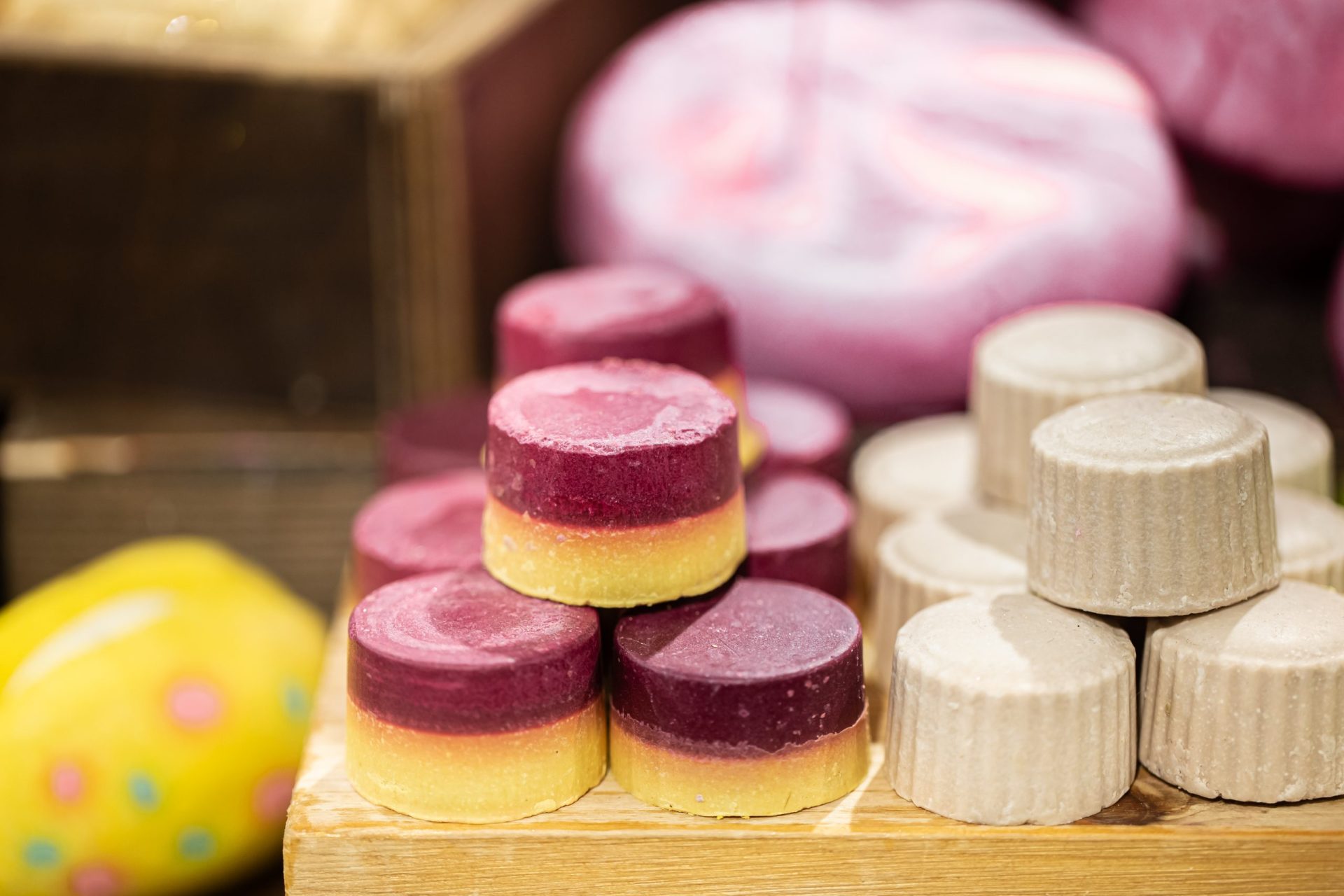
Most people never consider what goes into getting their hair clean. But the numbers are hard to ignore. In the United States alone, roughly 550 million shampoo bottles end up in landfills each year. That figure only accounts for one product category; conditioner and body wash containers add millions more.
Here is what makes the problem worse. The typical liquid cleanser bottle is about 60 to 80 percent water by volume, according to research on cosmetic formulations published in peer-reviewed journals. You are essentially paying to ship water across the country in a plastic container, only to mix it with more water in the shower.
Solid hair care bars flip that equation. By removing water from the formula entirely, solid shampoo manufacturing yields a more concentrated, lighter-to-transport product and eliminates single-use plastic packaging. The result? A measurably smaller footprint at every stage of the product lifecycle.
But how much of a difference does it actually make? Let’s break it down.
Eliminating Plastic Packaging at the Source
Ditching the Bottle Entirely
The most visible change when switching to a solid bar is what you don’t see: no plastic bottle. Most solid formulations ship in simple paper wraps, recyclable cardboard, or compostable packaging. Some brands skip wrapping altogether.
Consider the scale of plastic waste from personal care products alone:
- Over 550 million containers of cleansing products are discarded annually in the U.S.
- HDPE (high-density polyethylene), the material used in most shampoo bottles, takes an estimated 450 years to break down in a landfill
- Only about 5 to 6 percent of all plastic waste in the U.S. actually gets recycled, according to recent data.
When a brand or retailer offers bars instead of bottles, there is simply less packaging material entering the waste stream. That is not a marginal improvement. For a hospitality company stocking guest amenity products, swapping bottles for bars across hundreds of rooms can divert thousands of containers from landfills each year.
Rethinking Secondary and Tertiary Packaging
It goes beyond just the container on the shelf. Liquid products require additional protective packaging for shipping: bubble wrap, molded inserts, and shrink film to prevent leaks. Compact bars, by contrast, stack neatly, tolerate handling, and rarely require leak-proof secondary packaging. Less packaging material at every level means fewer raw resources consumed.
Cutting Transportation Emissions Through Lighter, Smaller Products
The Weight Advantage
A standard 12-ounce bottle of liquid cleanser weighs significantly more than a 3-ounce bar that delivers the same number of washes. When you strip out the water, you strip out most of the weight, and lighter freight means lower fuel consumption.
Think about this from a logistics perspective. A pallet of solid bars can hold the washing equivalent of several pallets of bottled product. Fewer trucks on the road, fewer cargo flights, fewer container ships. The carbon emissions savings compound quickly at scale.
Compact Footprint, Bigger Yield
Because bars are more concentrated, they tend to last longer per ounce than their liquid counterparts. Industry estimates suggest a single well-formulated bar can replace two to three standard-size bottles. That ratio translates directly into reduced shipping frequency for retailers and fewer trips to the store for consumers.
| Factor | Liquid Cleanser (12 oz bottle) | Solid Bar (3 oz equivalent) |
| Water content | 60-80% | 0% |
| Typical washes per unit | 30-40 | 60-80 |
| Plastic packaging | HDPE bottle + cap | Paper or cardboard (often none) |
| Shipping weight per wash | Higher | Significantly lower |
| Shelf space required | Large | Minimal |
| Spill or leak risk | Moderate | None |
Reducing Water Usage in Manufacturing and at Home
Less Water in the Formula
Because solid formulations skip the aqueous base, the manufacturing process itself consumes less water. That is a meaningful distinction, especially in regions where water scarcity is a growing concern. Colorado, for instance, has experienced prolonged drought, and any reduction in industrial water use matters.
Shorter Rinse Times in the Shower
Users of solid bars frequently report that the product rinses out more quickly. This anecdotal observation makes sense from a formulation standpoint. Without fillers, thickeners, and conditioning agents designed to cling, the active ingredients do their job and wash away cleanly. Shorter rinse cycles may reduce your household water use over time.
Research by Kröhnert and Stucki (2021), published in the journal Sustainability, found that the consumer-use phase, particularly the heating of water during showering, accounts for the largest share of a cleanser’s lifecycle emissions. One hair wash was estimated to produce about 161 grams of CO2 equivalent, measured from raw materials to disposal. Anything that shortens your time under hot water makes a measurable dent.
Supporting Cleaner Ingredient Lists
Fewer Preservatives Needed
Here is something that doesn’t get discussed enough: liquid products need preservatives to prevent microbial growth in all that water. Parabens, phenoxyethanol, and formaldehyde-releasing agents are common options. Solid bars, with minimal or zero water content, face a dramatically lower risk of contamination. Many formulations can reduce or omit preservatives entirely.
This does not automatically make every solid bar “cleaner” or “safer.” Under FDA regulations, cosmetic products must remain safe for consumers, regardless of form. But it does simplify the ingredient deck, which matters to brands’ positioning around transparency and short ingredient lists.
Earth-Conscious Ingredients and Responsible Sourcing
Many indie beauty brands now prioritize organic products made with sustainably sourced botanicals, fair-trade butters, and plant-derived surfactants. Investing in these supply chains supports agricultural practices that are gentler on ecosystems.
A word of caution here. The term “organic” on cosmetics has a specific regulatory meaning. Agricultural ingredients labeled as organic must meet USDA National Organic Program (NOP) certification standards. “Natural” and “organic” are not interchangeable, and claiming certifications without proper documentation violates FTC labeling guidelines. Reputable brands and their contract manufacturing partners take this distinction seriously.
Extending Product Lifespan to Cut Consumption
More Washes Per Dollar
An ethical shampoo bar that lasts 60 to 80 washes costs a fraction of the per-wash price of premium bottled alternatives. That longevity means consumers purchase fewer products overall, which feeds back into every other benefit on this list: fewer items manufactured, packaged, shipped, and discarded.
Proper Storage Maximizes Every Bar
There is a catch, though. Bars left sitting in a pool of water dissolve faster than they should. Proper drainage between uses is essential. A well-drained dish or rack in the shower helps keep the bar dry and significantly extends its life. The shampoo you use is partly determined by how well you store what you already have.
Lowering Energy Demands Across the Supply Chain
Simpler Production Processes
Manufacturing liquid products involves heating, mixing, homogenizing, and sometimes pasteurizing large volumes of water-based formulations. The energy demands of extrusion-based bar production differ in character, often involving mechanical pressing or hot-pour methods rather than prolonged heating cycles.
Every facility is different, and in our experience, the energy profile of solid bar manufacturing depends heavily on formulation type, batch size, and equipment efficiency. Sweeping claims about energy savings should be taken with a grain of salt. But there is a reasonable case to be made that compact, waterless products require less total energy per functional unit.
Encouraging Renewable Energy Adoption
The sustainability conversation doesn’t stop at the product. Forward-thinking manufacturers are pairing low-waste products with operational improvements, such as LED lighting on the production floor, energy-efficient HVAC, and, where feasible, solar or wind power. This layered approach multiplies the carbon footprint reduction that starts with the bar itself.
Making Travel and Everyday Routines Greener
The Carry-On Advantage
Anyone who travels frequently knows the hassle of liquid toiletry restrictions. Solid products sidestep TSA liquid limits entirely, so there’s no need to check baggage just to bring your hair care along. Shampoo travel becomes effortless with a small tin or pouch, saving both the energy of extra luggage handling and the frustration of half-empty mini bottles.
A growing collection of travel-sized and full-sized solid options now exists across every product category: cleansing, conditioning, shaving, and body wash. The hospitality industry has noticed, too. Several U.S. states have passed legislation banning single-use mini toiletry bottles in hotels. Solid conditioner bars and similar amenity-friendly formats are stepping in as the preferred replacement.
Building Greener Daily Habits
Switching to a solid bar is perhaps the simplest change someone can make to reduce their daily environmental impact. It does not require a lifestyle overhaul. The product sits in your shower, works the same way, and simply generates less waste. That kind of low-friction sustainability is what actually drives widespread adoption.
Frequently Asked Questions
What are 10 ways to reduce your carbon footprint?
Beyond switching your hair products, there are plenty of practical steps. Use energy-efficient appliances and LED lighting at home. Choose public transit, cycling, or carpooling over solo driving whenever possible. Cut down on fast fashion by shopping secondhand or from responsible brands. Eat more plant-based meals each week. Reduce household water consumption with low-flow fixtures. Avoid single-use plastics by carrying reusable bags and containers. Support local businesses to reduce long-distance shipping. Line-dry laundry instead of running the dryer. Insulate your home properly to lower heating and cooling energy demands. Finally, offset what you cannot eliminate through verified carbon credit programs.
Are shampoo bars better for the environment?
In most lifecycle categories, yes. Solid bars eliminate plastic waste, weigh less during transport, and skip the water that makes up the bulk of liquid formulas. These factors combine to lower carbon emissions from production through disposal. However, the environmental impact also depends on ingredient sourcing and consumer behavior. A bar made with palm-oil-derived surfactants from unsustainable plantations still carries ecological baggage. The manufacturing scale and energy mix of the production facility also matter. Choosing bars from transparent, responsible producers gives you the strongest environmental advantage over conventional bottled alternatives.
How can salons reduce their carbon footprint?
Professional salons generate roughly 877 pounds of waste per minute across North America, according to data from Green Circle Salons. Switching to solid wash and conditioning products dramatically cuts plastic container disposal. Installing low-flow showerheads at washing stations reduces water consumption by up to 50 percent. Using energy-efficient LED lighting and Energy Star-rated appliances lowers electricity bills and grid demand. Partnering with specialized recycling programs to repurpose hair clippings, foils, and excess color prevents these materials from reaching landfills, and sourcing products with biodegradable formulas and minimal packaging rounds out a strong sustainability strategy.
How do hair products affect the environment?
Personal care formulations contribute to environmental harm at multiple stages. Manufacturing consumes energy, water, and raw materials sourced from global supply chains. Plastic packaging adds to the 300 million metric tons of plastic waste produced worldwide each year, according to the United Nations Environment Programme. Chemical ingredients like certain sulfates and silicones can persist in waterways after rinsing, potentially harming aquatic ecosystems. Transporting heavy, water-filled bottles increases carbon emissions. Even product disposal becomes problematic when non-recyclable containers end up in landfills. Choosing formulations that minimize these impacts across their full lifecycle is the most effective way to lower the toll.
Ready to Build a Lower-Impact Product Line?
If you are a brand looking to launch solid bars that genuinely deliver on sustainability, MidSolid Press & Pour can help you get there. From custom formulation to full-scale production, we work with indie beauty labels, established retailers, and hospitality companies to create pressed-and-poured bar products that perform as well as they protect the planet.
Let’s talk about your next project. Reach out to our team for a consultation or quote, and we will walk you through the process from concept to finished product.