


Solid Shampoo and Conditioner
7 Signs Your Brand Is Ready to Scale Solid Shampoo Bar Production
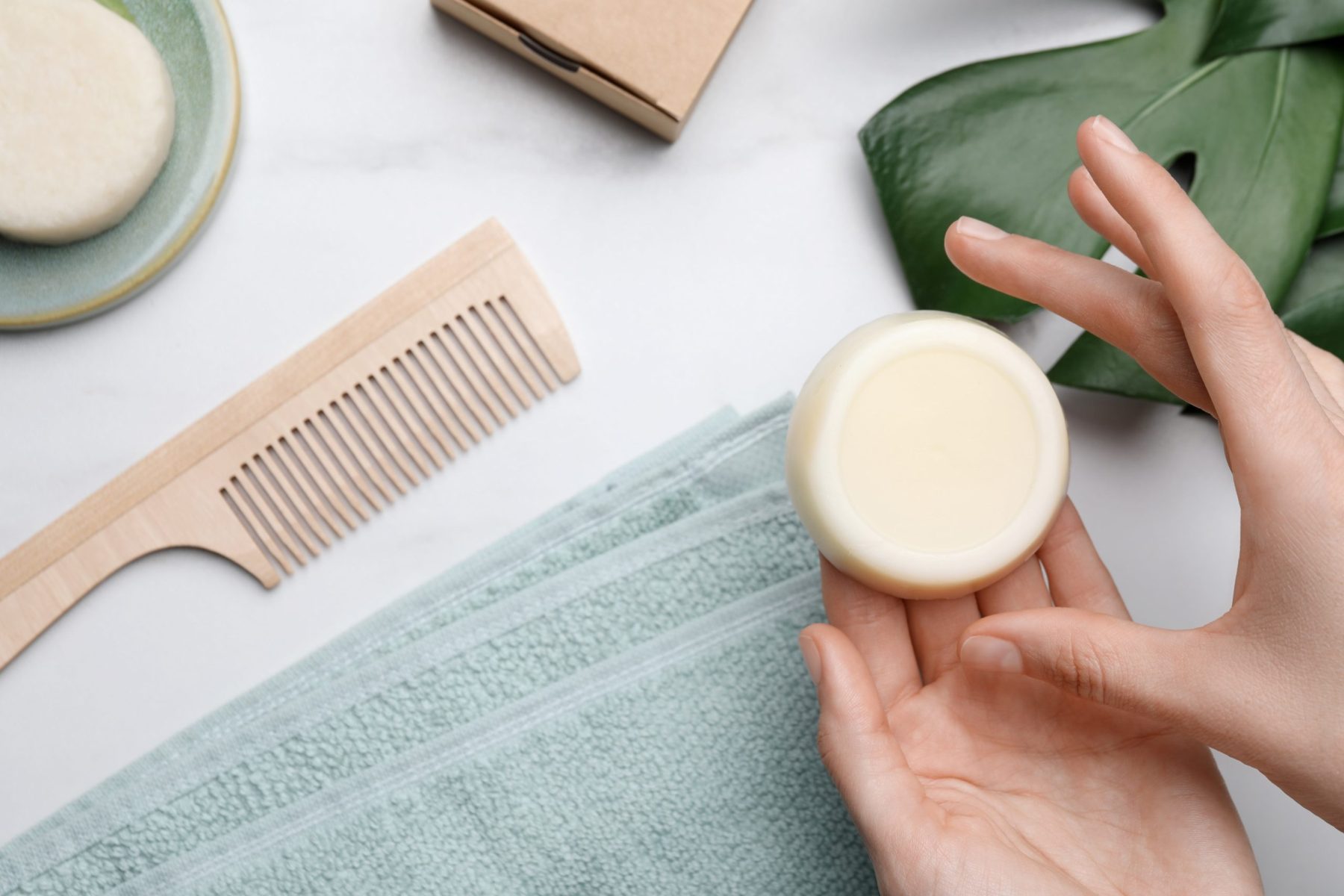
Most founders remember the exact moment the kitchen stopped working. Maybe it was the order that arrived faster than the curing rack could keep up. It may have been a wholesale buyer requesting a thousand units and a lead time you couldn’t honestly promise. Growth has a way of announcing itself through logistics rather than celebration.
Knowing when to hand fabrication to a partner is harder than it sounds. Move too early, and you pay for capacity you cannot fill. Wait too long,g and you turn down revenue, ship inconsistent batches, or burn out the two people holding the whole operation together. Founders typically begin evaluating shampoo bar contract manufacturing when repeat demand becomes predictable enough that production, not sales, becomes the primary growth constraint. So how do you read the signals correctly?
In our experience working with indie beauty founders, retailers, and hospitality buyers, the readiness question rarely hinges on a single metric. It shows up as a pattern. Below are seven signals that, taken together, suggest your brand has outgrown self-fulfillment and is ready for a different kind of capacity.
Demand Has Outpaced Your In-House Output
This is the most obvious sign, and also the easiest one to misread. A few busy weeks are not a trend. A consistent backlog is.
If you are routinely quoting longer lead times than you would like, or capping wholesale conversations because you cannot promise volume, the constraint has moved from sales to production. Look at your reorder rate. Repeat purchases tell you the formula works and the demand is durable, not a novelty spike. The broader category supports the pattern: the solid shampoo bars market is valued at roughly 1.3 billion dollars in 2026 and is forecast to reach 2.7 billion dollars by 2036, with a steady 7.4 percent annual growth rate, according to Future Market Insights. Household buyers account for the large majority of that demand, which means repeat, routine use rather than one-time trial.
When your sales pipeline consistently exceeds what your hands can produce, the gap is not a scheduling problem. It is a structural one.
Your Batches No Longer Match From Run to Run
Consistency is the quiet killer of small brands. A bar that lathers beautifully in March and feels waxy in July will erode trust faster than any marketing can rebuild it.
Hand-pressed, small-run production introduces natural variation. Ambient humidity, slight differences in mixing, curing time, and pressing force all shift the finished bar. At low volumes, you can inspect every unit and quietly discard the misfits. At scale, that is no longer realistic, and the variation reaches customers.
Industrial fabrication, whether through extrusion or hot pour, holds tighter tolerances on density, weight, and hardness. If you find yourself apologizing for batch differences or fielding reviews that mention texture changes, the production method itself has become the problem. A reliable bar, every single time, is not a luxury at scale. It is the baseline.
Retailers and Distributors Are Asking for More Than You Can Sign
Wholesale and retail interest changes the math entirely. A buyer does not want a great bar; they want a great bar, on time, in case-pack quantities, with consistent labeling and documentation.
Ask yourself a few honest questions. Can you fulfill a purchase order without disrupting your direct-to-consumer fulfillment? Can you hold safety stock? Can you absorb a reorder that lands earlier than forecast? If retail conversations excite you and frighten you in equal measure, that tension is the signal.
The moment founders begin turning away wholesale conversations because production cannot keep up, the business has usually outgrown manual fabrication.
Solid formats are gaining real shelf space in physical retail and online alike. Major brands have brought bars into mainstream chains, and online sales now form a substantial share of the category. The buyers are there. The question is whether your fulfillment can meet them without breaking.
The Numbers Finally Support a Production Run
Here is where founders often hesitate, and reasonably so. Contract fabrication involves minimum order quantities, and an MOQ can feel intimidating before you have run the figures.
A useful exercise: compare your true per-unit cost today, including your own labor, against the per-unit cost of a production run. Founders almost always undervalue their time. The scale effect is straightforward: small hand-pressed runs carry a high per-unit labor cost, and that figure falls substantially as volume rises and the work shifts from manual effort to a production line. When you price your hours honestly, the small-batch model often looks far more expensive than it felt.
A few financial markers that suggest readiness:
- Your reorder rate is steady enough to forecast demand a quarter ahead with reasonable confidence
- You can sell through a production run within a sensible window without straining cash flow
- Your margins currently absorb the hidden cost of manual fabrication, packing, and quality checks
- You have, or can access, the working capital to fund a run before revenue returns
For many brands, the move from handmade production to a dedicated shampoo bar manufacturer happens between consistent four-figure monthly unit sales and the first meaningful retail expansion. To put scale in context, the table below compares small-batch fulfillment with a contract manufacturing model across the factors that matter most.
| Factor | Small-Batch / Self-Fulfillment | Contract Manufacturing Partner |
| Output ceiling | Limited by hands, space, and curing racks | Thousands of units per week |
| Unit consistency | Varies with conditions and operator | Held to tight, repeatable tolerances |
| Founder time | Heavy, ongoing, hard to scale | Freed for brand, sales, product |
| Cost per bar | Often understated; labor hidden | Transparent; scales down with volume |
| Lead time to buyers | Unpredictable | Planned and committed |
| Compliance support | Founder’s responsibility | Shared with manufacturing partner |
The point is not that one model wins outright. Small batches are right for testing and early traction. But once the figures line up, paying for reliable output is usually cheaper than paying for your own exhausted weekends.
Founder Bottlenecks Are Slowing Business Growth
What is the actual cost of a founder stuck at the workbench?
It is the marketing that never ships. The wholesale outreach stalls. The new variant stays in your head because there is no time to develop it. When fabrication consumes the hours that should go to growth, the business plateaus even as orders climb. That is a strange, frustrating place to be: busy, profitable on paper, and stuck.
Handing production over to a hair-care manufacturing partner is not really about the bars. It is about reclaiming the founder’s attention for the work only the founder can do: brand, relationships, and product direction. If your calendar is mostly mixing and pressing, the business is paying a tax you may not have priced.
Your Shampoo Bar Formula Is Stable Enough for Scale
Scaling an unfinished formula is an expensive mistake. Before committing to a production run, the recipe should be genuinely settled.
Proven means more than “we like it.” It means real customers have used it across hair types and water conditions and kept buying. It means you understand how the bar performs in hard water, how it holds up in a humid bathroom, and how long it lasts in normal use. Most quality solid bars deliver between 60 and 80 washes, and customers notice when that promise does not hold.
What makes a good shampoo bar at scale? A stable surfactant system, a balanced pH suited to hair and scalp, predictable lather, a clean rinse, and physical durability through shipping and storage. The market has shifted decisively toward syndet-based bars precisely because they deliver this reliability across varied water conditions. If your formula still changes every few months, finish that work first. A locked formula is the foundation on which a production line is built.
You Have a Scalable Message, Not Just a Scalable Product
A bar that performs is necessary. It is not sufficient. The brand around it has to travel.
Does your positioning resonate beyond the early adopters who found you first? Can a new customer understand, in one sentence, why your bar belongs in their routine? Marketing strategists describe this as a scalable message, one that holds up when you put real spend behind it and reach people who have never heard of you. If your growth so far has come mostly from friends, local markets, and word of mouth, test the message with paid reach before you commit to volume.
Manufacturing capacity and market demand have to rise together. There is little sense in producing thousands of bars if the story that sells them only works in a farmers’ market booth. Scaling is the dream, but it only works when the message scales with the output.
Reading the Signs Together
No single signal is decisive. One slow month proves nothing; one big purchase order does not mean you are ready. The honest read comes from the pattern.
If you recognized your brand in four or five of these signs, the conversation is worth having now, before a missed deadline or a wobbling batch forces it. Scalable haircare production is not a leap of faith when the groundwork is in place. The strongest scaling decisions are made before production problems become customer problems, and the brands that handle them well tend to be the ones that read the signals early rather than late.
Frequently Asked Questions
How long does a shampoo bar typically last?
A standard solid shampoo bar typically provides 60-80 washes, though the exact number depends on bar size, hair length, wash frequency, and storage habits. This is why a single bar is often described as replacing two to three standard bottles of liquid shampoo. Keeping the bar on a draining dish between uses, away from a direct stream of water, extends its life considerably. Buyers tend to notice longevity quickly, so accurate wash-count claims matter.
How long does it take for hair to adjust to bar shampoo?
Many people switching from liquid products experience a short transition period, often cited as one to four weeks, during which hair may feel different as the scalp adapts. This is most noticeable when moving away from formulas heavy in silicones. A well-formulated syndet bar with a hair-friendly pH usually shortens or eliminates this phase, since it cleanses more like liquid shampoo. For brands, setting honest expectations with customers reduces early returns and protects repeat-purchase rates during that initial window.
Is a solid shampoo bar better than liquid shampoo?
Neither format is universally better; each suits different priorities. Solid bars remove the water that makes up most of a liquid product, thereby reducing shipping weight, reducing plastic packaging, and concentrating the active ingredients. They also tend to travel well and last longer per unit. Liquid shampoo still offers familiarity and effortless lather for some users. For brands weighing the decision, solid formats align with measurable consumer demand for lower-waste packaging and increasingly compete on cleansing performance rather than just sustainability appeal.
What minimum order quantity should a brand expect from a contract manufacturer?
Minimum order quantities vary by manufacturer and process, but solid bar production typically starts in the low thousands of units per run. At MidSolid Press & Pour, the minimum is 5,000 bars per production run, with weekly capacity reaching up to 35,000 bars. Brands evaluating readiness should compare an MOQ against their realistic sell-through rate and available working capital. If a run can be sold within a reasonable window without straining cash flow, the MOQ is usually a sign of readiness rather than a barrier.
Ready to Talk Through Your Production Run?
If several of these signs sound familiar, the next step is a straightforward conversation about volume, formulation, and timing. MidSolid Press & Pour works with indie beauty brands, retailers, and hospitality clients to scale proven formulas into reliable, repeatable production through dedicated solid-shampoo manufacturing capabilities. Whether you need private-label hair cleansing bars or want to discuss a white-label arrangement, the team can help you plan a run that matches your demand. Reach out for a consultation or quote, and bring your numbers; the clearer the picture, the better the guidance.