


Solid Shampoo and Conditioner
7 Things Every Brand Should Know Before Packaging Solid Shampoo Bars for Retail
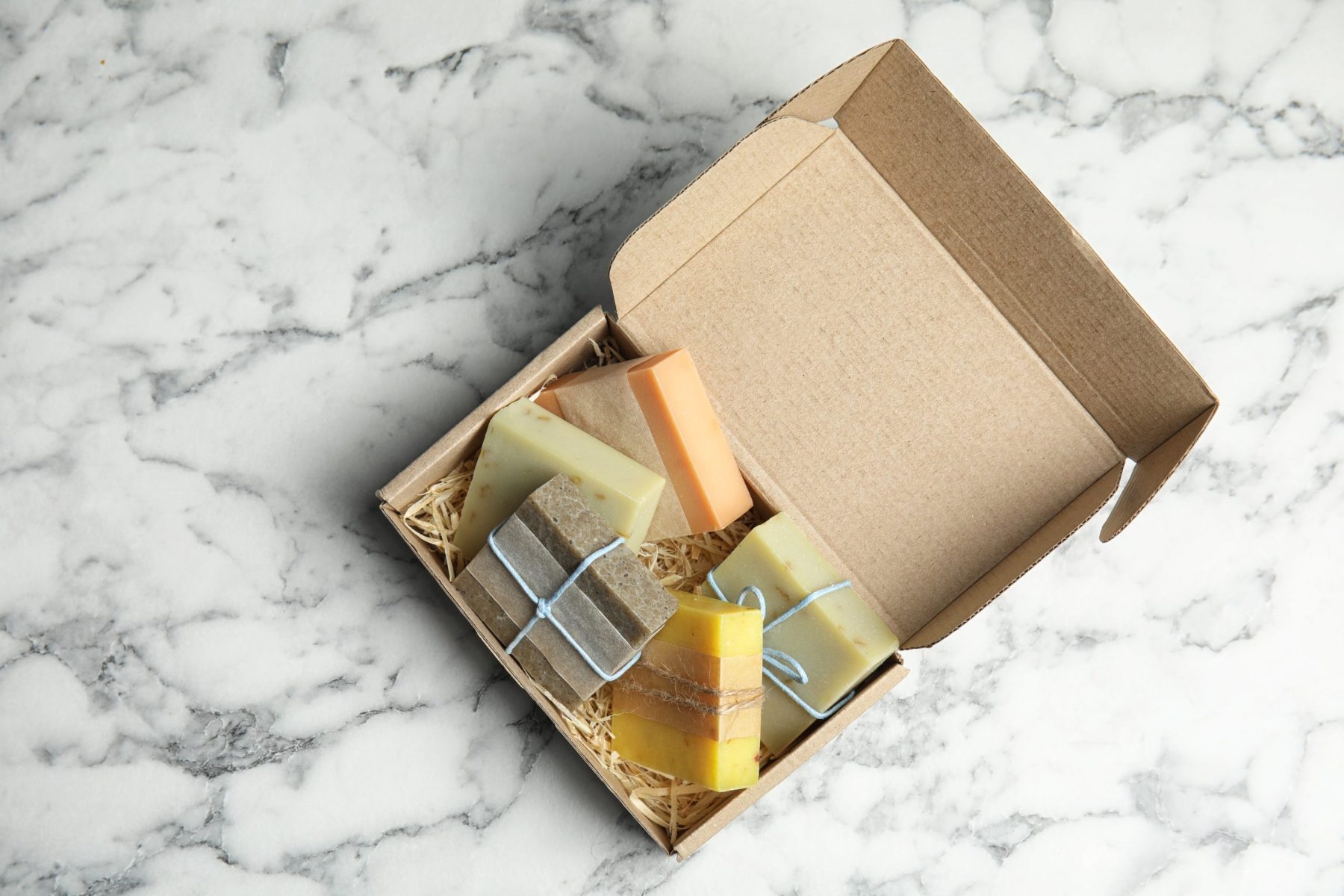
A solid bar sitting on a store shelf has roughly three seconds to do its job before a shopper moves on. Packaging carries most of that weight. It protects a product that, unlike a bottle, has no built-in barrier between the formula and the outside world. It tells a buyer what the thing is, how to use it, and why it costs what it costs. And it has to satisfy a stack of federal labeling rules that many new brands do not fully understand until a retailer’s compliance team flags a problem.
We work with indie beauty founders, established personal care lines, and hospitality groups, and packaging questions come up in nearly every first conversation. People expect the formula to be the hard part. Often it is the box, the wrap, and the label that hold up a launch. So before you finalize artwork or commit to a run, here are the seven things worth understanding.
Retail-ready packaging for shampoo bars, in plain terms, means packaging that does four jobs at once:
- Protects the bar through shipping, storage, and shelf display
- Meets cosmetic labeling law, so a retailer’s compliance check passes cleanly
- Communicates the product’s positioning and price tier clearly
- Supports retailer merchandising rules, from barcode placement to shelf footprint
Miss any one of those and a launch stalls. Get all four right, and the package quietly does its job.
Why Shampoo Bar Packaging Is a Production Decision, Not an Afterthought
There is a habit, especially among newer brands, of treating the outer wrap as something to sort out after the formula is locked. That sequence causes problems. A press-formed bar and a poured bar have different surface textures, different edge profiles, and slightly different tolerances on weight and thickness. A carton sized for one will not always suit the other.
When packaging is chosen late, brands end up with cartons that are a few millimeters too generous, so the bar rattles, or too tight, so the printed interior scuffs during shipping. Neither looks good when a customer opens it. In our experience, smoother launches happen when the packaging format and bar format are decided together early, as one conversation rather than two.
There is also a cost angle. Packaging is frequently the single largest line item in the unit economics of a retail bar, sometimes outpacing the formula itself. Decisions made for visual reasons alone, without considering material cost and shipping weight, tend to surface later as margin problems.
The Two Things Shampoo Bar Packaging Has to Do at Once
Strong retail packaging does two jobs that occasionally pull in opposite directions. It has to protect and preserve the product. And it has to sell it. A wrapper that performs brilliantly as a moisture barrier but looks generic will underperform next to a competitor. A beautiful carton that lets the bar dry out, soften, or pick up scent from neighboring products on the shelf is a return waiting to happen.
Those two goals are not really in conflict, though. They reinforce each other more often than not. A package that keeps the bar in good condition until it reaches the bathroom is also a package that earns repeat purchases. Repeat purchases are what retailers actually care about.
Protection: what the bar actually needs
A syndet or cold-process bar is more vulnerable than a bottle of liquid product. Here is what packaging has to guard against:
- Moisture and humidity, which can soften certain formulas or encourage a tacky surface before the customer even opens the box
- Scent migration, where a strongly fragranced bar bleeds into an unscented one, or absorbs aroma from a nearby product on a crowded shelf
- Physical scuffing during transit, picking, and restocking dulls the appearance of an otherwise good bar.
- Crumbling at the edges, more of a risk with brittle formulas and thin profiles.
- Light exposure is relevant for bars colored with natural pigments that can fade.
Not every bar faces every risk. A robust syndet formula handles humidity better than a soft, butter-heavy bar. Knowing your formula’s weak points tells you which packaging features are worth paying for and which are not.
Presentation: what the shopper responds to
The selling side is partly aesthetic and partly informational. Shoppers want to see or sense the product. Many bar brands use a partial reveal, a band, or a window so that the buyer can view the actual bar. Texture matters too. An uncoated kraft carton signals one kind of brand; a soft-touch laminated box signals another. Neither is correct in the abstract. The right choice depends on where the product sits, the price point, and who is buying.
Common Shampoo Bar Packaging Formats and How They Compare
There is no single best option. The format that suits a bar in a refill-focused zero-waste store differs from what suits the same category of bar in a department store gift set. Here is how the main approaches stack up.
| Format | Protection level | Shelf appeal | Sustainability story | Typical use |
| Folding carton (paperboard) | Medium to high | Strong, full print surface | Good, recyclable, plastic-free | Most retail shelves are the default for many brands |
| Paper band or belly wrap | Low to medium | Moderate, shows the bar | Strong, minimal material | Zero-waste retailers, eco-positioned lines |
| Tin or metal case | High | Premium feel, reusable | Mixed, durable but energy-intensive | Travel sets, gifting, and higher price points |
| Shrink or compostable film | Medium | Low on its own, often paired | Varies sharply by film type | Hygiene seal, often inside a carton |
| Pillow pouch or sachet | Low to medium | Moderate | Good if paper-based | Samples, subscription inserts, hospitality |
A point worth making: many brands combine two of these. A folding carton on the outside, with a thin compostable film as a hygiene seal underneath, is a common pairing and addresses a real shopper concern: whether the product has been handled. Hospitality buyers, by contrast, often want a single-use sachet or a small banded bar for guest amenities, where the priorities are unit cost and a tidy presentation on a bathroom counter.
It is also worth a quick word on why this category keeps growing. Plastic waste is the driver. The EPA has reported that plastic generation in US municipal solid waste reached well over 35 million tons in a single year, with containers and packaging making up a large share of that total. Sustainable shampoo bar packaging is, in part, a direct answer to that figure, and retail buyers increasingly expect a credible plastic-reduction story on the pack.
What the Shampoo Bar Label Legally Has to Say
This is the part brands most often get wrong, and it is worth slowing down for. Solid shampoo is a cosmetic under federal law. The FD&C Act defines cosmetics as products applied to the body for cleansing or beautifying, and the FDA’s cosmetic labeling rules apply in full. That has direct consequences for what your packaging must carry.
A cosmetic label needs a statement of identity on the principal display panel, the front of the package, so a shopper knows at a glance what the product is. It needs an accurate net weight, stated in both metric and avoirdupois units. It needs the name and a US address of the responsible firm. And it needs a full ingredient declaration, ordered by predominance, placed where a consumer is reasonably likely to see it.
One nuance trips people up constantly. A true soap, defined narrowly as a product whose cleansing action comes mainly from alkali fatty-acid salts and which makes no claim beyond cleansing, falls outside the cosmetic definition and instead follows FTC and Fair Packaging and Labeling Act rules. The moment a label says anything like “moisturizing” or “softening,” or the bar is a synthetic detergent formula, it is a cosmetic. Most solid shampoos on the market are syndet products, technically not soap at all, so for the great majority of brands, the cosmetic rules apply. When in doubt, treat the product as a cosmetic and label accordingly.
Worth knowing too: the Modernization of Cosmetics Regulation Act, or MoCRA, has expanded federal oversight of cosmetics, including facility registration and product listing with the FDA. Fragrance allergen disclosure on labels is also subject to MoCRA, though as of early 2026, the FDA had not yet finalized that specific rule. Brands designing label artwork now should leave room for that information rather than reprint everything later. A contract manufacturing partner can usually advise on where compliance responsibility sits, since under MoCRA, the “responsible person” is whoever’s name appears on the label.
Claims, Certifications, and the Words You Cannot Use
Packaging copy is marketing, but it is also regulated. The FTC’s rules against deceptive labeling cover ingredient, origin, and benefit claims that a brand cannot substantiate.
A few practical guardrails:
- The word “organic” on a cosmetic is not decorative. Agricultural ingredient claims of that kind rely on USDA National Organic Program certification. “Natural” and “organic” are not interchangeable, and using the latter without the certification invites trouble.
- Therapeutic language, anything suggesting the bar treats dandruff, fixes a scalp condition, or cures a problem, can reclassify the product as an over-the-counter drug, with a much heavier regulatory burden. Keep the copy to cleansing and cosmetic benefits unless the product is genuinely registered as a drug.
- “FDA approved” cannot appear on a cosmetic. The FDA does not approve cosmetics, and the phrase is not permitted.
None of this means packaging copy has to be dull. It means the appealing claims must be true. A brand that says its bar lasts a certain number of washes should be able to show the basis for that figure.
Designing for the Channel: Retail Shelf Versus Travel and Hospitality
Where a bar is sold should shape how it is packaged. A bar headed for a retail shelf competes visually and needs a printable surface, often a carton, with a barcode and the full required label set. A bar headed into a hotel amenity program has entirely different priorities: low unit cost, compact format, hygienic single-use presentation, and a look that suits a bathroom counter rather than a store display.
Travel is its own packaging case. Solid shampoo has a genuine practical advantage there, and it is fair to put it on the pack. Because a bar is a solid, it falls outside the TSA’s 3-1-1 liquid rule, so that a traveler can carry it in hand luggage with no size limit and no quart bag. TSA guidance on what travelers can bring treats solid toiletries as solids rather than liquids. For a travel-oriented product, compact packaging that holds up in a bag and perhaps includes a small tin or case is a real selling point. Hospitality buyers and travel retailers both respond to that, so a brand selling into those channels may want a packaging variant rather than one universal box.
Planning Production: Quantities, Lead Times, and Getting It Right Early
The last thing to know is operational. Packaging has its own minimum order quantities, lead times, and proofing cycle, and these rarely line up neatly with the bar production schedule. Custom printed cartons can take longer to produce than the bars themselves. Brands that approve packaging artwork late often end up holding finished bars while they wait for boxes.
A sensible sequence looks roughly like this. Lock the formula and the bar format. Confirm dimensions and weight tolerances. Choose the packaging format based on the channel and protection needs. Build the label with all required compliance elements. Proof, then commit to the run. When packaging and production are planned together, the schedule holds. When they are planned apart, something usually slips.
This is also where working with a manufacturer who runs a dedicated solid shampoo production line helps, because the team has seen which carton sizes suit which bar profiles and can flag a mismatch before it becomes an expensive reprint. The same goes for brands weighing whether to go with a fully custom formula or a faster route through a private-label shampoo program, where some packaging decisions are partly preset, and the timeline is shorter.
Quick Answers to Common Questions
What is the best packaging for shampoo bars?
There is no single best option, since the right choice depends on the channel and the formula. For most retail shelves, a printed folding carton works well: it protects the bar, carries the full required label, and prints cleanly. Eco-positioned brands often prefer a paper band with minimal material. Travel and gifting lines lean toward tins. Many brands pair a carton with a thin compostable film as a hygiene seal. Match the format to where the product is sold and to what the formula needs.
How do you package shampoo bars for shipping?
For direct shipping, the bar needs a snug inner package, usually a carton sized to the bar’s exact dimensions, so it cannot shift or scuff. A loose fit causes rattling and edge damage. Add a hygiene seal if the bar will be handled before reaching the customer. The outer mailer should be rigid enough to resist crushing. Bars are denser than they look, so confirm the mailer and any void fills suit the shipped weight. Cushioning matters most for brittle, thin formulas.
What are the downsides of shampoo bars?
A few honest ones. Bars can soften or get mushy if left in standing water, which makes a draining dish or proper storage important for the end user. Some formulas have a learning curve, since the lather and rinse feel different from those of liquid products. A bar with no packaging barrier is exposed to humidity and scent migration. And shelf appeal depends heavily on the package, since a bare bar communicates less than a bottle. Good packaging and clear instructions for use address most of these concerns directly.
Can you take shampoo bars through TSA security?
Yes, in practical terms. Solid shampoo bars are classified as solids, not liquids, so the TSA’s 3-1-1 liquid rule does not apply to them. A traveler can pack a bar in carry-on or checked luggage with no size limit and no quart-bag requirement. An agent may occasionally swab a bar, but it will not be confiscated for being a liquid. For brands, this is a genuine selling point worth noting on travel-oriented packaging, though claims should accurately reflect the rule rather than overstate it.
Are shampoo bars a cosmetic or a soap?
For most brands, the answer is cosmetic. The FDA reserves the “soap” classification for products whose cleansing action comes mainly from alkali fatty-acid salts and which make no claim beyond cleansing. Most solid shampoos use synthetic detergents and market benefits like conditioning or shine, both of which place them firmly in cosmetic territory. The distinction is not academic. It decides which labeling rules apply, what the ingredient declaration must look like, and whether MoCRA registration obligations attach to the product.
Do shampoo bars need FDA approval before sale?
No. The FDA does not pre-approve cosmetics, and a shampoo bar can go to market without agency sign-off. That said, “no approval” is “no rules.” The product still has to be safe, properly labeled, and, under MoCRA, listed with the FDA along with its manufacturing facility. The phrase “FDA approved” must never appear on the pack. Brands sometimes assume the absence of pre-approval means a light regulatory load. The opposite is closer to true.
Talk to a Manufacturing Partner Before You Print
Packaging decisions are easier and cheaper when they are made alongside production rather than after it. If you are bringing a solid shampoo line to retail and want a partner who can match the bar format, the packaging format, and the compliance requirements from the start, we would be glad to talk it through.
Reach out for a production consultation or quote, and we can walk through formats, quantities, and timelines for your specific launch. Whether you need a custom formula or a faster route to shelf, getting the packaging conversation started early saves money later.