


Solid Shampoo and Conditioner
How Clean Beauty Is Reshaping the Way Hair Care Products Are Manufactured
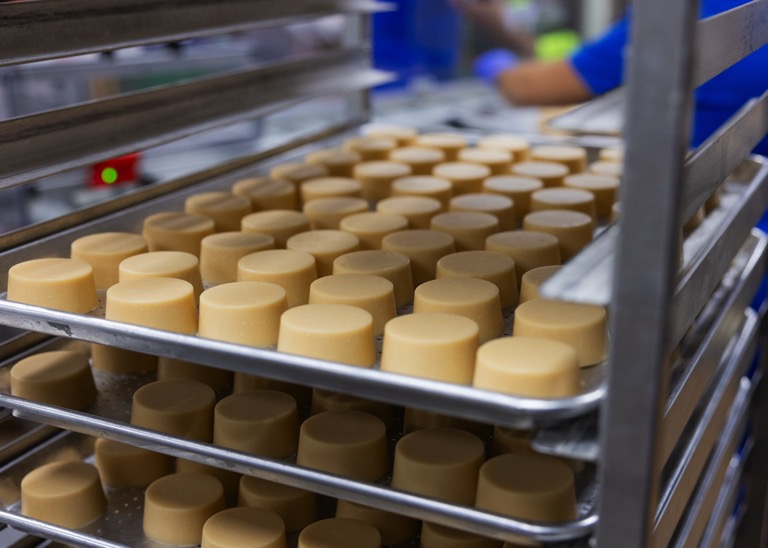
Something is happening in contract manufacturing facilities across the country, and it has nothing to do with flashy marketing campaigns or influencer endorsements. The actual production lines, the ingredient sourcing protocols, the lab benches where formulations are tested, all of it is changing because of one movement that refuses to slow down.
Non-toxic beauty has gone from niche demand to a baseline expectation. Consumers today read labels. They cross-reference ingredient lists with apps like Yuka and INCI Beauty. They know what sulfates do, why parabens concern them, and how silicones interact with the scalp over time. That awareness flows directly upstream to manufacturers.
For brands launching solid shampoo bars or conditioning treatments, the formula brief now includes a list of excluded ingredients that sometimes runs longer than the list of included ones. In our experience, that is not a problem; it is a creative challenge worth meeting.
Here is how this movement is playing out on the manufacturing side, told from the perspective of people who press, pour, and ship these products every week.
Reformulation Without Compromise
Perhaps the biggest myth in this space is that removing conventional chemicals means accepting a weaker product. Early attempts at “green” formulations did underperform. That reality gave skeptics plenty of ammunition. But formulation science has closed the gap considerably.
Coconut-derived surfactants, sugar-based cleansers, and plant protein complexes now deliver lather, slip, and conditioning power that rivals their synthetic predecessors. The trick, and this is where manufacturing expertise matters, is understanding how these botanicals behave under heat, pressure, and varying pH levels.
- Fatty acid blends from shea and cocoa butter can replace petroleum-derived emollients in solid bars.
- Fermented rice water extract offers strengthening benefits that once monopolized by keratin treatments.
- Natural preservative systems using rosemary oleoresin and tocopherols maintain shelf stability without parabens.
- Plant-based surfactants require adjusted processing temperatures, but the results hold up in wash tests.
Brands that partner with a manufacturer fluent in clean formulations avoid the trial-and-error period that derails timelines. Not every facility has retooled its equipment or trained its lab staff for these newer ingredient profiles, though. That gap between intention and execution is real.
Scalp-First Thinking Changes Everything
For decades, the industry focused on the strand. Shine, smoothness, volume, all measured at the fiber level. The emerging consensus, however, is that scalp health is central to lasting results. Healthy follicles produce stronger, more resilient growth. Irritated or imbalanced scalps do the opposite.
This realization affects how formulations are built from the ground up. A shampoo bar designed with the scalp microbiome in mind uses gentler surfactant systems, incorporates prebiotics or postbiotics, and avoids fragrance compounds known to trigger sensitivity.
What Scalp-Focused Formulation Looks Like in Practice
- pH-balanced cleansing that respects the acid mantle (typically between 4.5 and 5.5)
- Inclusion of soothing botanicals like chamomile, calendula, or centella asiatica
- Avoidance of aggressive foaming agents that strip the natural lipid barrier
- Lightweight conditioning agents that hydrate without buildup
Contract manufacturers fielding scalp-oriented briefs need to think more like skincare formulators. The overlap between what consumers expect from a facial serum and what they now want from their shampoo is substantial. Brands that recognize this early tend to outperform those still marketing purely on fragrance and foam.
Ingredient Transparency as a Production Standard
Transparency used to be a marketing buzzword. Now it is a regulatory reality. The Modernization of Cosmetics Regulation Act of 2022 (MoCRA) represents the most significant expansion of FDA authority over cosmetics since the original FD&C Act of 1938. Under MoCRA, facilities that manufacture or process cosmetic products for U.S. distribution must register with the FDA and submit product listings, including full ingredient disclosures.
The responsible person, typically the manufacturer, packer, or distributor whose name appears on the label, must also report serious adverse events to the FDA within 15 days. These requirements took effect in mid-2024, with additional provisions around good manufacturing practices (GMP) still being finalized.
Why This Matters for Brands Going Non-Toxic
- Every ingredient must be documented and traceable through the supply chain
- Facilities must maintain records that demonstrate safety substantiation for each product
- Small business exemptions exist, but do not apply to all product categories
- Labels must include updated contact information for the responsible person as of December 2024
For companies developing syndet cleansing bars or conditioning treatments, MoCRA compliance is not optional. Working with a contract manufacturer that already maintains these protocols saves months of back-and-forth and reduces legal exposure.
Brands entering the market today face a regulatory landscape that would have been unrecognizable five years ago. The upside? Greater accountability across the board, which lifts the entire industry.
Sustainable Sourcing of Ingredients Becomes Non-Negotiable
The term “sustainable sourcing” gets thrown around loosely, so let us be specific. Responsible ingredient procurement means verifiable supply chains, documented fair trade relationships, and environmental impact assessments that go beyond a PDF on a website.
Consumers purchasing products labeled as containing argan oil want to know where that oil originates, who harvested it, and whether the local ecosystem was considered during extraction. The same applies to shea butter, coconut oil, babassu, and dozens of other botanicals commonly used in bar-format hair products.
- Certified organic agricultural ingredients require USDA National Organic Program (NOP) verification, a specific, audited standard.
- “Natural” carries no regulated definition under U.S. law for cosmetics, making third-party certifications particularly valuable
- Responsibly harvested palm derivatives must be traceable through RSPO or equivalent programs.
- Regional sourcing, when feasible, cuts transportation emissions and shortens lead times.
Sustainable sourcing practices create a ripple effect throughout production. Cleaner raw materials often require less processing, fewer stabilizers, and simpler formulation architectures. That efficiency benefits everyone in the value chain.
Environmentally Conscious Packaging Gains Ground
The bottle, tube, or wrapper is now part of the product story. Consumers notice. Retailers notice. And in some markets, regulators are beginning to notice as well.
Solid-form products, such as shampoo bars, conditioner bars, and shave bars, already offer a packaging advantage. In many cases, they eliminate the need for plastic bottles. But the packaging conversation extends further:
- Compostable kraft wraps and seed-embedded paper bands replace shrink film
- Post-consumer recycled (PCR) cardboard reduces virgin material demand
- Minimalist labeling reduces ink usage and simplifies end-of-life recycling
- Concentrated formulations mean smaller units, which translates to fewer shipping materials
A solid conditioner production line can deliver thousands of units per week with a fraction of the packaging waste generated by liquid alternatives. That is not marketing spin. It is measurable in dumpster volume and freight costs.
Water-free formulations also reduce product weight, lowering carbon output during transit. When a brand can tell its customers that the product itself is part of the sustainability story, not just the label, that resonates.
Clean Technology on the Factory Floor
Green chemistry principles are reshaping what happens inside the manufacturing facility, not just what goes into the final bar or bottle. Closed-loop water systems, energy recovery during extrusion, and solvent-free processing all fall under the umbrella of clean technology in cosmetic manufacturing.
Modern extrusion equipment can process plant-based formulations at lower temperatures than older machinery, preserving the bioactivity of heat-sensitive ingredients such as essential oils and botanical extracts. The difference in finished product quality is noticeable during stability testing.
Manufacturing processes that embrace these methods tend to produce less waste, consume fewer resources per unit, and generate output that meets both domestic and EU regulatory thresholds. For brands with international ambitions, that dual compliance capability is a genuine competitive edge.
What “Organic” Actually Means, and What It Does Not
This is where well-intentioned brands often stumble. Labeling a cosmetic product as “organic” in the United States requires USDA NOP certification for its agricultural ingredients. That is an audited, documented process involving farm-level verification and chain-of-custody records. It is not the same as using one organic ingredient and calling the entire formula organic.
The FTC monitors advertising claims, and while enforcement actions in cosmetics are less common than in food, they do happen. “Greenwashing” is a recognized risk that erodes consumer trust across the category.
| Claim | What It Requires | Common Pitfall |
| Organic | USDA NOP certification for agricultural ingredients | Conflating “natural” with “organic” on labels |
| Natural | No federal standard; varies by retailer or certifier | Over-claiming without third-party verification |
| Cruelty-free | Leaping Bunny or PETA certification recommended | Assuming no animal testing at one stage covers the entire supply chain |
| Sulfate-free | Absence of sodium lauryl sulfate and sodium laureth sulfate | Using other harsh surfactants that are technically not “sulfates.” |
| Vegan | No animal-derived ingredients | Overlooking processing aids like lanolin or beeswax in sub-components |
| Paraben-free | No methylparaben, propylparaben, butylparaben, etc. | Replacing parabens with preservatives that carry their own concerns |
Companies serious about accurate labeling work with manufacturers who maintain documentation at every stage, from raw material receipt through finished goods release. A contract manufacturer that cuts corners on traceability exposes both itself and the brand to regulatory action.
The Rise of Waterless and Concentrated Formats
Liquid shampoos and conditioners are roughly 70-80% water. That is a lot of weight, packaging, and preserved water sitting on store shelves.
Solid bars, concentrated pastes, and powder-to-liquid formats directly challenge that convention. They deliver the same active ingredients in a fraction of the volume. The manufacturing considerations differ, of course. Solid shampoo bars require precise moisture content during pressing, and conditioning bars demand specific melt profiles to achieve the right texture and performance during use.
- Waterless formulations typically last 2 to 3 times longer than their liquid equivalents.
- Reduced water content lowers the need for heavy-duty preservative systems
- Solid formats tolerate a wider range of storage temperatures, reducing cold-chain requirements
- Concentrated products reduce per-unit shipping costs, improving margins for DTC brands
The hot pour process enables certain formulation types that cold-press methods cannot achieve, particularly when working with higher-melting-point butters and waxes. Understanding which production method suits which formula is precisely where a knowledgeable manufacturer adds value.
Not every product needs to be a bar, obviously. But for brands exploring the solid or concentrated category, the environmental and economic arguments are compelling.
Beauty Trends That Are Here to Stay
Some movements in the cosmetics industry burn hot and fade. Clean formulations in the haircare space do not appear to be one of them. The structural forces, from regulatory tightening under MoCRA to consumer education via social media, from retailer mandates at Sephora and Target to the expansion of independent certification programs, all point in the same direction.
The global market for products positioned around non-toxic ingredients is projected to reach approximately $14 billion by 2030, growing at a compound annual growth rate of 12 percent. A single demographic or geography does not drive that trajectory. Gen Z buyers, millennial parents, salon professionals, and hospitality companies are all pulling demand in the same direction.
- Retailers increasingly require third-party certification before stocking new SKUs
- Salon professionals report growing client demand for products without toxic ingredients.
- Hospitality brands, including boutique hotels and wellness resorts, are replacing conventional guest amenity bars with cleaner alternatives.
- Indie brands are launching with “free-from” lists as a founding principle rather than an afterthought.
- Formulation labs prioritize plant-derived actives over petrochemical alternatives.s
- Scalp microbiome research is opening new categories that did not exist three years ago.
For brands and contract manufacturers alike, this is not about chasing a fad. It is about building infrastructure, knowledge, and supply chains to serve a market whose expectations have fundamentally changed.
Frequently Asked Questions
What makes hair products clean?
A product earns its “non-toxic” reputation through deliberate ingredient exclusion and intentional formulation choices. Typically, this means avoiding sulfates, parabens, phthalates, formaldehyde donors, and synthetic fragrances. The FDA does not define “clean” as a regulatory category, so third-party certifications from organizations like EWG Verified or Leaping Bunny provide an external standard. Ingredient transparency also plays a significant role. Brands that publish full INCI lists and explain why each component is included give buyers the information they need to make informed decisions. The absence of harmful compounds matters, but so does the intention behind what replaces them.
When did clean beauty become popular?
The roots of the movement trace back to the 1990s, when consumer skepticism about aluminum in antiperspirants and synthetic preservatives in skincare began to grow. Brands like Ren (launched in 2000) and Tata Harper (founded in 2010) brought premium positioning to naturally derived formulations. Beautycounter, established in 2013, pushed the conversation toward legislative advocacy. By the late 2010s, major retailers such as Sephora and Target had created dedicated sections for verified non-toxic lines. The real acceleration came post-2020 as ingredient-checking apps, social media education, and increased health awareness converged to make informed purchasing a mainstream expectation rather than a specialty behavior.
What is the correct order of hair care products?
General guidance from dermatologists and trichologists follows this sequence: start with a clarifying or gentle cleanser applied primarily to the scalp, then follow with a conditioner focused on mid-lengths and ends. A leave-in treatment or detangling spray comes next for those who need it, followed by any targeted serums for the scalp or strands. Styling products like mousse, cream, or gel are applied last. For individuals using solid-format bars, the sequence remains similar. Still, the application technique differs slightly since the bar is rubbed between wet hands or directly onto wet follicles before lathering. Adjusting the routine based on texture and porosity produces the best outcomes.
Ready to Build Your Next Product Line?
MidSolid Press & Pour works with indie brands, established retailers, and hospitality companies that want to bring clean, effective, and responsibly made products to market. Whether you are developing a shave bar for a grooming line or scaling a full collection of solid shampoos and conditioners, we handle formulation, production, and fulfillment from our facility in Douglas County, Colorado.
Reach out through our contact page to start a conversation about your next project. We will talk through your vision, your ingredient requirements, and what it takes to get from concept to finished goods.