


Solid Shampoo and Conditioner
How to Grow Your Shampoo Bar Output Without Compromising What Makes It Great
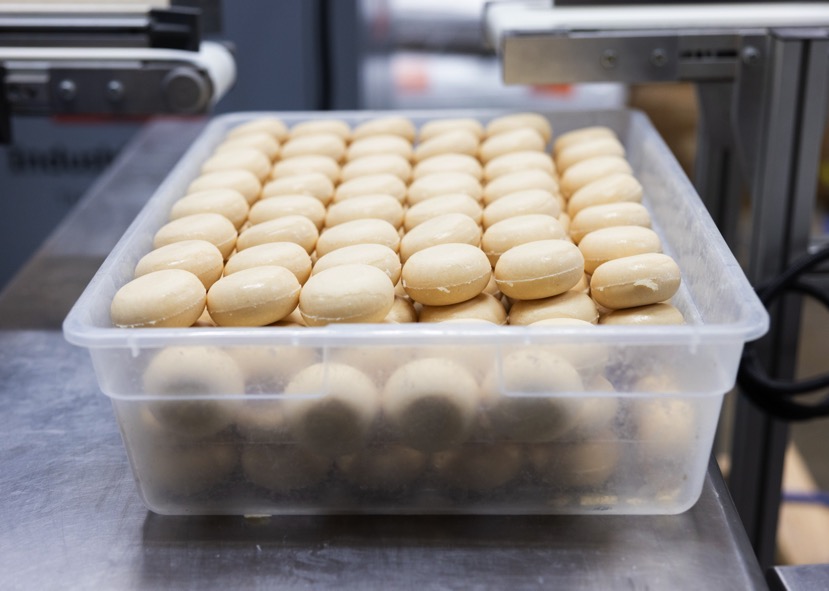
The demand for shampoo bars has grown rapidly over the past few years, and if your brand is feeling the pressure to make more units faster, you are not alone. But here is the tension every growing personal care company faces: the processes that worked beautifully for 500 bars a week start to crack once you aim for 5,000 or 10,000.
Batch consistency is often the first casualty. Ingredients behave differently when mixed in larger volumes. Equipment that handled small runs with ease simply cannot keep pace. And the team members who hand-checked every single bar? They are now overwhelmed.
Perhaps the most overlooked risk is what happens after a batch ships. A single recall, a run of off-spec products reaching store shelves, or negative reviews tied to inconsistency can erase months of brand-building in a matter of days. So the question is not really whether you can afford to grow carefully. It is a question of whether you can afford not to.
This page walks through 10 practical strategies for solid shampoo manufacturing that protect product integrity at every step, from receipt of raw materials through final packaging.
Lock Down Your Formulations Before You Grow
Before adding a second shift or purchasing new equipment, ask a simple question: Is your formula truly ready for larger volumes?
A recipe that performs well in a 5-pound test batch may not behave the same way at 500 pounds. Surfactant systems, particularly those built around sodium cocoyl isethionate (SCI), can react differently when processed under higher mechanical shear or at slightly different temperatures. Butters and waxes may not distribute evenly. Fragrance notes can shift.
Stability testing at target volume is non-negotiable. This means running full-size pilot batches, not just scaled-up lab samples, and then evaluating them over weeks. Here is what your pre-scale checklist should include:
- A documented master formula with exact percentages, tolerances, and approved ingredient suppliers
- pH verification at each batch size (solid shampoo formulations typically target a pH between 5.0 and 6.5)
- Accelerated stability data covering heat, humidity, and light exposure
- Hardness, lather, and dissolution testing on finished bars
- Fragrance retention checks after 30, 60, and 90 days
Every formulation variable you leave unfixed before increasing output becomes a source of inconsistency later. Brands that invest time up front to finalize their formulations avoid costly rework down the line.
The Syndet vs. Cold Process Distinction
It matters here because these two categories of bars respond to volume increases in very different ways. Syndet bars (made from synthetic detergent bases rather than saponified oils) generally tolerate high-volume production well, especially when produced by extrusion. Cold-processed bars require a curing time of four to six weeks, which creates warehouse space constraints and ties up working capital. Understand which type of bar your product actually is, because the path to greater output depends on it.
Standardize Every Step With Written Procedures
In our experience, the biggest gap between a 500-bar-a-week operation and a 5,000-bar-a-week operation is not equipment. It is documentation.
Standard Operating Procedures (SOPs) need to cover every touchpoint: raw material receiving and inspection, weighing tolerances, mixing times and temperatures, pressing or pouring specifications, curing protocols (if applicable), and final inspection criteria. Without these, you are relying on tribal knowledge, which does not scale.
SOPs also play a role you might not immediately consider: regulatory readiness. Under the Modernization of Cosmetics Regulation Act of 2022 (MoCRA), the FDA is required to establish Good Manufacturing Practice (GMP) requirements for cosmetic facilities. While final GMP rules are still being developed as of early 2026, having detailed SOPs already in place positions your operation ahead of compliance deadlines. Brands working with a contract manufacturer should confirm that their partner facility maintains documented procedures that can withstand a regulatory audit.
Batch Records Are Not Optional
Every production run needs a complete batch record. That includes raw material lot numbers, weights, processing parameters, in-process test results, operator identification, and any deviations. If something goes wrong six months after a batch ships, a good batch record lets you trace the issue back to its root cause. Without one, you are guessing.
Choose the Right Manufacturing Method for Your Volume
Not every production approach works at every output level. Selecting the wrong method is one of the most expensive mistakes a growing brand can make.
| Method | Best For | Typical Volume | Advantages | Limitations |
| Hand Molding | Startups, artisan brands | Under 1,000 bars/week | Low capital cost, maximum flexibility | Labor-intensive, inconsistent weight and shape |
| Hot Pour | Small to mid-size runs | 1,000–5,000 bars/week | Good ingredient integration, dense finished bars | Slower cycle times, limited shape options, and heavy manual labor for demolding |
| Extrusion | Mid to large-volume production | 5,000–50,000+ bars/week | Automated, consistent, cost-efficient at volume | Higher upfront equipment investment requires pre-compounded noodles or pellets |
| Compressed/Pressed | Large-volume production | 10,000–100,000+ bars/week | Fast cycle times, wide shape variety | Requires precise moisture content, may need specialized tooling |
Extrusion is the workhorse of large-scale manufacturing for solid bars. The process feeds pre-mixed material through a barrel under pressure, producing a continuous log that is cut and stamped into individual bars. It minimizes manual labor, delivers uniform weight and density, and supports downstream automated packaging. For brands approaching the 5,000+ bar-per-week threshold, exploring an extruded production process is almost certainly the right move.
Hot pour methods remain valuable for certain formulations that require visible inclusions, layered designs, or ingredients sensitive to mechanical pressure. The key is matching your method to your formula and your target volume, not the other way around.
Invest in Equipment That Matches Your Growth Plan
Buying equipment reactively, only when you are already behind on orders, puts you in a cycle of constant catch-up. A better approach is to invest in machinery rated for the output you expect to reach within the next 18 to 24 months.
That does not mean purchasing the most expensive system on the market. It means thinking carefully about:
- Mixing and compounding capacity: Can your mixer handle the batch sizes you will need next year, not just this quarter?
- Press or extruder throughput: What is its rated output in bars per hour, and does that number hold up with your specific formula?
- Packaging line speed: A bottleneck at the end of your line negates every upstream efficiency gain
- Cooling and curing infrastructure: For products that need post-production conditioning, do you have adequate climate-controlled space?
Automation brings a second benefit beyond speed: repeatability. Automated filling, cutting, stamping, and wrapping systems reduce the variability that human operators naturally introduce. Even small upgrades, such as automated weight-check stations and reject systems, can dramatically reduce off-spec output.
Build Reliable Ingredient Sourcing and Supply Chain Partnerships
Scaling without a dependable supply chain is like adding horsepower to a car with bald tires. You will move faster, but not safely.
Supplier relationships matter enormously at this stage. Here is what a robust ingredient sourcing strategy looks like for a growing bar manufacturer:
- Qualify at least two approved suppliers for every critical raw material, especially for key surfactants like SCI and cocamidopropyl betaine (CAPB)
- Request Certificates of Analysis (COAs) for every incoming lot, and verify them against your specifications
- Establish written agreements covering lead times, minimum order quantities, pricing stability, and force majeure provisions.
- Plan for seasonality and global disruptions; for example, coconut-derived ingredients can be affected by weather events in Southeast Asia.
Ingredient traceability is both a regulatory expectation and a business safeguard. Under MoCRA, cosmetic manufacturers must maintain records sufficient to identify every supplier for each ingredient used. Building this traceability into your receiving process from day one prevents a painful retrofit later.
One more thing brands sometimes overlook: if you are making claims about being organic, the agricultural ingredients must have USDA National Organic Program (NOP) certification. The word “natural” has no regulated definition under the FDA or USDA for cosmetics, so be precise in your labeling. A contract manufacturing partner experienced in private label shampoo production can help you stay on the right side of these requirements.
Put a Formal Quality Control System in Place
At small volumes, a keen eye and occasional pH test might suffice. At higher volumes, quality control must be a system, not a person.
Incoming Material Inspection
Every raw material delivery should be checked against its COA before it enters your production area. This means verifying appearance, odor, and pH (where applicable) and confirming that the lot number matches the documentation. Rejecting a substandard ingredient at the dock is infinitely cheaper than discovering a defect after 10,000 bars are stamped and wrapped.
In-Process Checks
During production, monitoring specific parameters at defined intervals catches drift before it becomes waste. For extruded shampoo bars, typical in-process checks include:
- Bar weight (individual and average)
- Hardness (penetrometer or similar)
- Visual inspection for surface defects, color consistency, and stamp clarity
- pH of a dissolved sample
Finished Product Testing
Before any batch is released for shipment, it should pass:
- Microbial testing is particularly important for bars containing botanical extracts or higher moisture levels
- Stability spot-checks against your reference standard
- Packaging integrity review (shrink wrap seal, label accuracy, case count)
Retain samples from every batch, stored under controlled conditions, for at least the product’s shelf life plus one year. These retained samples are your evidence trail if a customer complaint or regulatory inquiry arises.
Manage the Curing Time Bottleneck
For brands producing cold-process or saponified bars, curing time is the single largest constraint on throughput. Traditional cold-process soap requires four to six weeks of curing to allow excess moisture to evaporate and the saponification reaction to complete fully. During this period, bars need adequate airflow, consistent temperature, and protection from dust and contamination.
Strategies to reduce or manage this bottleneck include:
- Switching to syndet-based formulations, which require minimal curing (typically 24 to 72 hours of drying, not weeks)
- Investing in climate-controlled cure rooms with dehumidification and air circulation systems
- Using drying racks with maximum surface exposure, not stacked or boxed storage
- Running a production schedule staggered well ahead of shipping commitments
This is actually one of the strongest arguments for working with a solid conditioner or bar-manufacturing partner that already has purpose-built curing infrastructure in place. The capital expense of building a proper cure room, along with the space it occupies, catches many growing brands off guard.
Humidity Control Is Not Optional
Even pressed or extruded bars benefit from controlled drying conditions before packaging. Wrapping bars while they still contain excess surface moisture leads to blooming, tackiness, and, in some cases, microbial growth during storage. Do not skip this step.
Train Your Team for Consistency, Not Just Speed
People are the connective tissue of any manufacturing operation, and no amount of equipment or automation fully replaces a well-trained team. But when volume ramps up, the instinct is to push for speed. That pressure often erodes the careful habits that kept earlier batches consistent.
Effective training for scaled production should cover:
- SOPs for every workstation, reviewed and signed by each operator
- Proper use and calibration of measuring instruments (scales, pH meters, thermometers)
- Defect recognition so that operators can flag problems in real time
- Hygiene and sanitation protocols are especially important for cosmetic products under the current FDA expectations
- Documentation practices, because a step not recorded is a step not traceable
Cross-training multiple team members on critical tasks also builds resilience. If your only experienced extruder operator calls in sick on a high-volume day, you need someone else who can step in without having to guess.
Think Carefully About Packaging and Labeling at Volume
Packaging decisions that work well at small scales can become surprisingly expensive or inefficient at higher volumes. Consider these areas as you grow:
- Packaging material sourcing: Moving to higher-order quantities may unlock better pricing, but only if your storage can handle them. Packaging materials stored improperly (due to humidity or temperature extremes) can warp, degrade, or contaminate products.
- Labeling accuracy: Under the FD&C Act, cosmetic products must carry proper labeling, including ingredient declarations in descending order of predominance. Shampoo bars containing synthetic detergents are classified as cosmetics, not soap, and must comply with FDA labeling rules accordingly. Errors on labels at volume are expensive to correct. Always proof labels against your current formula before a print run.
- Sustainability claims: Many shampoo bar brands position themselves as eco-friendly, and packaging is central to that story. Claims such as “plastic-free” or “biodegradable” must be truthful and substantiated per the FTC Green Guides. Vague or unverified environmental claims invite regulatory scrutiny and consumer backlash.
Automating your labeling and wrapping process pays dividends here. Machines apply labels more accurately than human hands over thousands of bars, and automated inspection systems can catch misaligned or missing labels before products leave your facility.
Partner With a Contract Manufacturer That Understands Your Growth
There comes a point when managing everything in-house becomes impractical and a liability. Perhaps your facility cannot support the output you need. Maybe your team lacks formulation expertise for new product extensions, such as syndet bars or conditioner bars. Or perhaps you simply want to focus on building your brand while a manufacturing partner handles the complexities of production.
A good contract manufacturer brings more than just floor space and equipment. Look for:
- Regulatory knowledge, including familiarity with MoCRA, FDA cosmetic labeling, and FTC advertising guidelines
- Formulation support, from tweaking an existing recipe for large-scale production to developing entirely new products
- Established ingredient supplier networks with backup sources already qualified
- Flexible capacity that can handle seasonal demand swings and promotional surges
- Transparent communication about lead times, MOQs, and production schedules
This is not a decision to make based solely on price. The cheapest contract manufacturer is rarely the best value if they cannot maintain the consistent quality your customers expect. Ask to see their batch records, tour the facility, and talk to other brands they work with. Due diligence at this stage saves you from painful surprises once your products are on retail shelves.
Frequently Asked Questions
What are the 4 pillars of scaling up?
The four pillars of scaling up a business typically refer to people, strategy, execution, and cash. People means having the right talent in the right roles as complexity grows. Strategy involves defining a clear growth plan and sticking to it. Execution covers implementing repeatable systems, SOPs, and accountability metrics across every department. Cash management addresses maintaining sufficient working capital to fund raw material purchases, equipment upgrades, and inventory buildup ahead of revenue. These pillars originated in business growth frameworks popularized by Verne Harnish and apply directly to personal care companies expanding their product lines and output capacity.
How to scale your business without losing quality?
Start by documenting every process so nothing depends on a single person’s memory. Invest in testing protocols that catch defects at multiple stages, not just at the end of the line. Build supplier redundancy so a single material shortage does not force you to accept substandard alternatives. Automate where repeatability matters most, such as weighing, mixing, and packaging. Train every team member on what “good” looks like and give them the authority to pause a line when something appears off. Finally, collect and act on data from batch records, customer feedback, and return rates to identify trends before they become systemic problems across your operation.
How to successfully scale a business?
Successful growth requires an honest assessment of your current bottlenecks before adding volume. Many companies assume they need more capacity when the real constraint is inefficient workflows or inconsistent availability of raw materials. Map your entire operation from order receipt to finished-goods shipping. Identify the three slowest or most error-prone steps and address those first. Seek outside expertise where your internal team lacks depth, whether that is formulation chemistry, regulatory compliance, or logistics. Set measurable milestones rather than open-ended targets, and review progress monthly. Growth sustained over years beats explosive expansion that collapses under its own weight within a single quarter.
Ready to Grow Your Bar Line With a Partner That Gets It Right?
Increasing output does not have to mean compromising what your customers love about your products. MidSolid Press & Pour works with indie beauty brands, established retailers, and hospitality companies to produce solid hair and body care bars at volumes that match your ambitions.
Whether you need help refining formulations for large-scale runs, building out a new product collection, or transitioning from in-house to outsourced production, our team in Douglas County, Colorado, is ready to talk through your options. Reach out for a consultation or quote and let us figure out the right path forward together.