


Solid Shampoo and Conditioner
How to Package Solid Conditioner Bars Without Plastic: 5 Format Options Compared
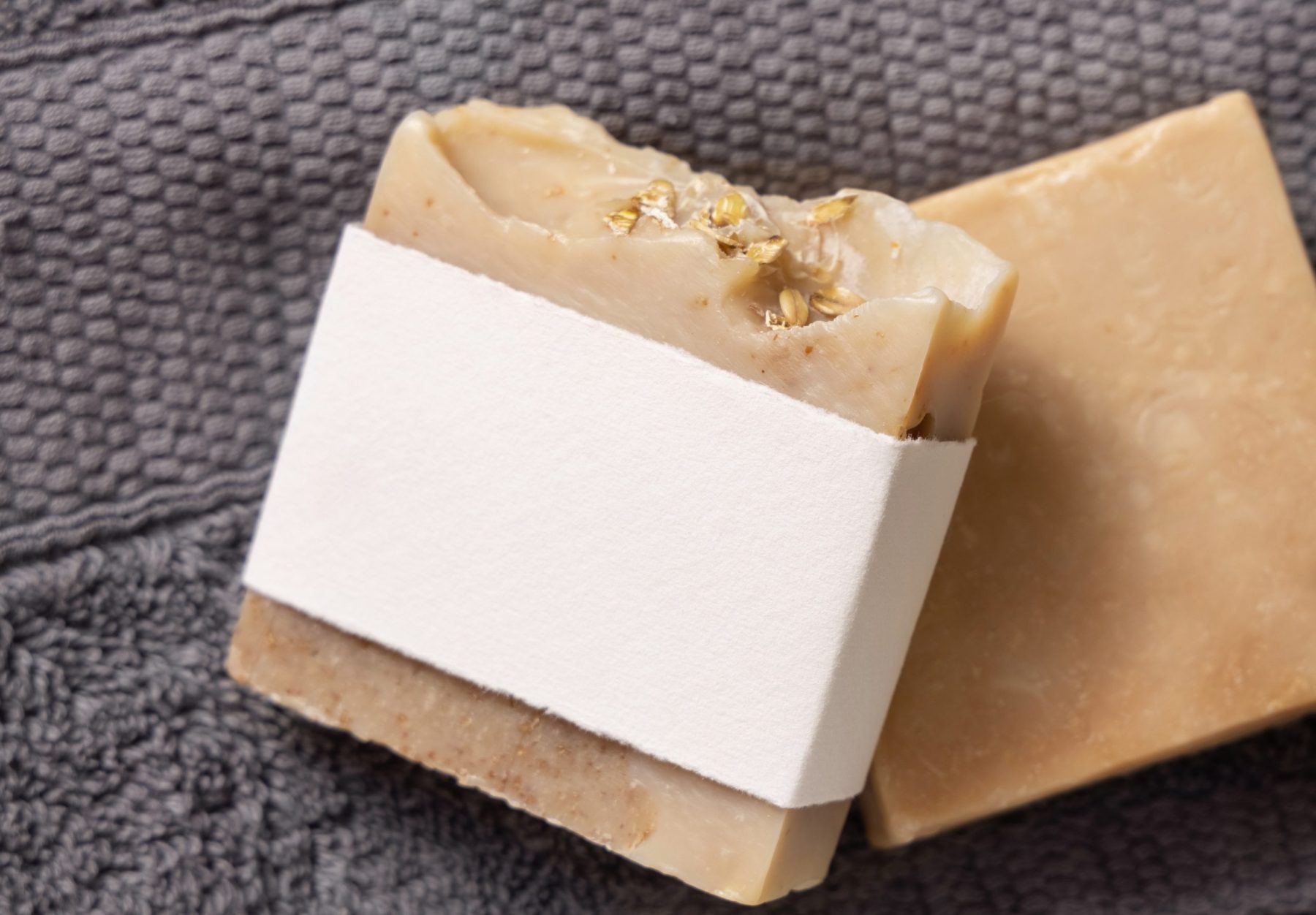
Picking a wrap for a solid haircare product feels deceptively simple. It is a small object. How hard can the outer layer be?
Then a brand owner starts asking the real questions, and the answers branch fast. Will the format survive a shipping route through a hot warehouse? Does it photograph well on a phone screen? Can a buyer actually recycle it at home, or is that a claim that will invite a complaint later?
We have run thousands of solid haircare units across our floor, and the outer layer is rarely an afterthought for the brands that do well. It is part of the product. A buyer holds the wrap before they ever touch what is inside, and that first contact sets an expectation. Get it right, and the unboxing feels considered. Get it wrong, and even a strong formula reads as cheap.
This page walks through five low-waste format options for a solid hair treatment bar. For each one, you will find what it does well, where it tends to disappoint, and the production realities that do not always show up in a glossy supplier catalog. See the comparison table below for a side-by-side view, plus a use-case grid and answers to the questions brand owners ask us most.
Why the Outer Layer Matters More Than Brands Expect
A solid hair treatment bar is, by its nature, a low-waste product. It removes the bottle. It removes most of the water. It ships lighter.
So a fair question comes up early in nearly every project: if the product is already the eco-story, why obsess over what wraps it?
Because the wrap is where the story can quietly fall apart, A brand can spend months refining a formula, then drop it into a glossy laminated sleeve that no curbside program will accept. Shoppers notice that contradiction. Surveys keep showing it. Research from P&G Beauty found that 75% of consumers want to buy more beauty products with packaging made from recycled material, and 65% already try to choose plastic-free packaging. The outer layer is doing marketing work whether a brand plans for it or not.
There is also a regulatory layer that catches newer brands off guard. The U.S. Federal Trade Commission governs environmental marketing claims through its Green Guides, and the rules are stricter than most assume. A wrap labeled “recyclable” actually has to be recoverable through programs most shoppers can access.
The FTC has been clear on this point. A product or package should not be marketed as recyclable unless it can be collected, separated, or otherwise recovered from the waste stream through an established recycling program. There is a specific threshold attached. When recycling facilities are not available to at least 60 percent of consumers, companies should qualify the recyclable claim by specifying the percentage of consumers or communities with access. Compostable carries its own bar. So the choice of format determines which claims a brand can legally print.
One more thing worth saying plainly. The right answer here depends on the brand. A travel-focused label and a refillable beauty subscription brand will land in different places, and that is fine. This page does not crown a winner. It helps a brand owner see the trade-offs clearly before a five-figure print run locks them in.
Format 1: Folding Carton Boxes
The folding carton is the workhorse. It is the small printed box that most retail haircare bars sit inside, and there is a reason it shows up everywhere.
Cartons give a brand a full canvas. Six printable panels, room for ingredient lists, usage directions, branding, and the regulatory copy that has to appear somewhere legible. They stack cleanly on a shelf, protect the contents in transit, and feel substantial in the hand. For a brand that sells through retailers, a carton is often the path of least resistance, since buyers and merchandisers already know how to handle the format.
Regarding environmental performance, cartons hold up well if the brand specifies the material carefully. Paperboard sourced from responsibly managed forests and certified through a chain-of-custody program gives buyers a credible claim. The Forest Stewardship Council awards certifications to packaging companies whose paper-based products comply with its sustainability standards, and FSC certification includes a chain-of-custody standard that tracks materials from certified forests to the final product. That traceability is what lets a brand say something specific rather than vague.
Where cartons disappoint:
- Glossy laminate films. A high-shine finish often relies on a plastic laminate that complicates recycling. Soy- or water-based inks and uncoated or matte stock keep the box cleanly curbside-recyclable.
- Empty volume. A bar is dense and small. A carton that is too generous wastes board, raises freight cost, and looks padded once opened.
- Cost is low for runs. Custom-printed cartons carry tooling and plate setup costs that sting at small quantities.
A carton built from a single fiber type, with no plastic window or laminate, also counts as mono-material packaging, which is the easiest kind for a recycling facility to process. In our experience, the carton suits established retail brands and gift-oriented lines. A purely direct-to-consumer brand chasing the lowest possible footprint can sometimes do better elsewhere.
Format 2: Kraft Paper Sleeves and Bands
A step down in material, and often in cost, is the kraft sleeve or belly band. Rather than fully enclosing the bar, this format wraps a printed paper strip around its middle, leaving part of the surface visible.
The appeal is honesty. The shopper sees the actual product. For a hair treatment bar with an appealing color or a pressed pattern, that visibility is a selling point a closed box cannot match.
Kraft stock also carries an unmistakable visual cue. Its natural brown tone reads as low-waste before a customer has read a single word, which is either an asset or a limitation depending on the brand’s positioning.
Sleeves use far less material than a full carton. Less fiber, less ink, less freight weight. For a brand built around a zero-waste packaging message, the format and the message line up without any explanation required.
The honest drawbacks:
- Limited protection. An exposed bar can pick up scuffs, dust, or moisture in transit and on the shelf.
- Small print area. A band offers a narrow strip of real estate. Fitting branding plus mandatory ingredient and warning copy gets tight, and many brands end up adding a separate insert card anyway.
- Premium ceiling. Kraft can look rustic and intentional, or unfinished. A luxury brand may find the format works against the price point.
This option fits indie brands, farmers’ markets, and boutique retail, as well as any line where a raw, honest look is part of the appeal.
Format 3: Glassine Paper Wraps
Glassine is the quiet specialist of this group, and it deserves more attention than it usually gets.
What is glassine paper? Glassine is a smooth, semi-translucent paper made grease-resistant through a mechanical process called supercalendering, rather than through any plastic or wax coating. That single trait makes it well-suited to oily or buttery solid bars.
A solid hair treatment bar can carry surface oils and butters that migrate slightly at room temperature. Many papers stain or soften on contact. Glassine resists that. Glassine is made by supercalendering bleached pulp to create a dense, uniform fiber structure that is airtight, grease-resistant, and moisture-resistant under moderate conditions, and it achieves these barrier properties without any added chemical treatments or surface coatings. Because the barrier comes from how the paper is made, not from an added layer, the wrap remains cleanly recyclable and, in many cases, home-compostable.
Glassine also looks distinctive. The soft translucency lets a hint of the product show through, which gives a premium, apothecary feel that Kraft cannot replicate. For brands selling a treatment bar as a small luxury, that quality is instantly apparent.
Where glassine has limits:
- Structure. It is a wrap, not a rigid shell. Glassine is usually paired with a sleeve or carton for retail rather than used on its own.
- Print performance. It takes ink differently from coated board. Bold, full-coverage artwork is harder to achieve than on a standard carton.
- Supplier familiarity. Fewer converters stock it, so that leads to longer lead times than for commodity kraft.
We tend to recommend glassine as an inner wrap, with a carton or band providing the outer structure and the bulk of the printed branding.
Format 4: Molded Pulp Trays and Clamshells
Molded pulp is the format people picture when they think of an egg carton, and it has matured well beyond that association.
What is molded pulp packaging? Molded pulp packaging is formed from recycled paper fiber slurry pressed into a custom mold, producing a shaped tray or clamshell that cushions and holds a product in place.
The structural advantage is real. A molded pulp tray can be tooled to the exact contour of a specific bar, which means no loose rattling, no filler, and genuine cushioning during rough shipping. For a brand shipping mostly direct-to-consumer, that protection reduces damage claims in a way a flat sleeve simply cannot.
Pulp also leans heavily into the recycled-content story: the fiber is typically post-consumer recycled material, and the finished tray is widely recyclable and often home-compostable. One molded pulp project produced a coffee pod container made entirely of the material that could be recycled or used as a home composting bin.
The trade-offs are about cost and finish:
- Tooling investment. A custom mold is a real upfront expense. The per-unit cost only becomes attractive across a sizable run, so molded pulp rarely makes sense for a first small batch.
- Surface and print. Pulp has a textured, matte face. Direct printing is limited, so most brands apply a label or pair the tray with a printed sleeve.
- Bulk. A pulp tray takes more shelf depth than a flat wrap, which matters for retail placement.
This format suits subscription and direct-to-consumer brands shipping at volume, as well as gift sets and multi-bar bundles, where a structured cradle adds perceived value.
Format 5: Tinned Steel Travel Containers
The last option steps away from paper entirely. A tinned steel container, the familiar round or rectangular tin, is a reusable format rather than a single-use one, and that changes the whole equation.
A tin is not low-waste because it gets discarded responsibly. It is low-waste because it does not get discarded at all. A customer keeps it, refills it, travels with it, and reaches for it for years.
For a bar product, the functional fit is excellent: a tin shields the contents from crushing, keeps a part-used bar from drying out or getting messy in a gym bag, and solves the storage problem that puts some shoppers off solid haircare in the first place. It photographs beautifully, too, which never hurts.
Steel is also genuinely recyclable at the end of life, and unlike many materials, it can be reprocessed repeatedly without losing quality. A tin fits naturally into a circular packaging model, where the same container cycles through use after use instead of being replaced.
The reasons a tin is not an automatic choice:
- Unit cost. A tin is the most expensive option on this list by a wide margin. It usually only pencils out for a premium product or a travel-specific item.
- Weight. Steel adds shipping weight, which partly offsets the freight savings that make solid bars attractive in the first place.
- Production fit. A tin pairs naturally with a paper inner wrap, so it is often a second layer rather than the entire solution.
These work for travel ranges, gifting, and premium positioning. As an everyday wrap for a value-priced bar, the cost trade-off rarely holds.
Compostable vs Recyclable Options: Comparing Five Solid Haircare Formats
Every brand weighs these factors differently, so rather than declare a winner, here is how the options stack up across what usually drives the decision.
| Format | Relative cost | Product protection | Print and branding | End-of-life | Best fit |
| Folding carton box | Moderate | Good | Excellent, six panels | Recyclable if uncoated | Retail and gift lines |
| Kraft sleeve or band | Low | Limited | Narrow print strip | Recyclable, often compostable | Indie and boutique brands |
| Glassine wrap | Low to moderate | Moderate, grease-resistant | Limited, best as an inner layer | Recyclable, often home-compostable | Premium inner wrap |
| Molded pulp tray | Moderate, high tooling | Excellent, custom-fit | Limited, label or sleeve | Recycled content, often compostable | High-volume direct-to-consumer |
| Tinned steel container | High | Excellent | Good via label | Reusable, fully recyclable | Travel and premium items |
A pattern shows up once the grid is laid out. The strongest programs rarely pick one row. They combine. A glassine inner wrap inside a printed carton. A Kraft band around a bar that sits in a molded pulp tray. The inner layer handles contact and protection; the outer layer carries the branding and the structure. That pairing instinct is worth keeping as a project moves from idea to specification.
Two material distinctions matter here because brands constantly mix them up. Recyclable means a material can re-enter manufacturing through a recovery program. Compostable means it breaks down into soil under defined conditions. A wrap can be one without being the other. Knowing which claim a format genuinely supports, and at what scale, keeps a label honest.
Best Eco-Friendly Packaging Option by Brand Goal
Different priorities point to different formats. This grid maps the most common goals to a recommended starting point.
| Brand goal | Recommended packaging format |
| Lowest unit cost | Kraft paper sleeve or band |
| Premium retail shelf presence | FSC-certified folding carton with a glassine inner wrap |
| Travel or on-the-go product | Reusable tinned steel container |
| Direct-to-consumer shipping durability | Custom-fit molded pulp tray |
| Strongest reuse and circularity story | Reusable tin, or an FSC carton for a single-use option |
| Easiest end-of-life for the customer | Mono-material kraft or uncoated carton |
These are starting points, not rules. A brand juggling more than one priority, say, low cost and shipping durability, will need to weigh which goal takes precedence
Key takeaways
- Folding cartons give the best shelf presence and print space for retail lines.
- Kraft sleeves are the lowest-cost route and read as low-waste instantly.
- Glassine works best as an oil-resistant inner wrap rather than a standalone outer layer.
- Molded pulp trays cushion direct-to-consumer shipments and cut damage claims.
- Tinned steel supports refill and travel positioning but carries the highest unit cost.
How to Package Conditioner Bars for Retail vs Direct-to-Consumer
So how should a brand owner actually choose? A few honest questions cut through it fast.
First, where does the product sell? A bar going onto a crowded retail shelf needs the print space and the shelf presence that a carton provides. A bar shipping straight to a customer’s door has different priorities, with damage protection near the top. The sales channel often narrows the field before anything else does.
Second, what is the price position? A value bar cannot absorb a tin. A luxury treatment bar can, and arguably should, since the format reinforces the price. Be realistic here. Packaging that fights the price point confuses shoppers.
Third, and this one gets skipped, what claim does the brand want to print? If a label needs to say “home-compostable,” the format and even the inks have to meet FTC scrutiny. Decide the claim early. Reverse-engineering a compliant wrap after artwork is approved is expensive and slow.
It also helps to think about the customer’s disposal step. Programs like How2Recycle, a standardized on-pack labeling system, give shoppers clear instructions for each packaging component, while services such as TerraCycle handle materials that local curbside programs reject. A format that a customer can recycle without having to hunt for instructions is a quietly stronger choice.
There is a tension worth naming. The lowest-material option is not always the lowest-impact one in practice. A flimsy wrap that fails in transit generates returns, replacements, and a second shipment, which can outweigh the fiber saved. Sometimes, a slightly heavier, sturdier format is the more responsible choice once the whole journey is taken into account. It is not a tidy answer, but it is the honest one.
This is also where a contract manufacturer earns its keep. We can pressure-test a packaging concept against real production constraints, run samples through actual shipping conditions, and flag a claim that will not survive scrutiny, all before a brand commits budget. The cost trade-off becomes clearer in bulk production, and the teams that loop us in early tend to avoid the costly mid-project pivot. If you are still weighing formulation against the wrap, our work as a solid haircare production partner covers both sides of that decision.
Frequently Asked Questions
What is the best packaging for shampoo bars?
There is no single best option, since the right wrap depends on sales channel, price point, and the environmental claim a brand wants to make. Retail-focused lines usually do well with printed cartons for shelf presence and label space. Direct-to-consumer brands often prefer molded pulp trays for shipping protection. Travel-oriented products suit reusable tins. Many strong programs combine an inner wrap, such as glassine, with a sturdier outer layer, balancing product protection against branding needs without leaning on plastic.
What is the most sustainable form of packaging?
Reusable packaging generally carries the lowest lifetime impact, because a container used many times avoids the repeated waste of single-use formats. A tinned steel container fits that model well for solid bars. Among single-use options, paper-based formats made from recycled or responsibly sourced fiber perform strongly, especially when they are home-compostable or widely recyclable. The honest answer, though, is that the lowest-impact format is the one that reliably protects the product, since damaged goods trigger replacement shipments that erase any material savings.
What are the 7 R’s of sustainable packaging?
The 7 R’s are a framework for reducing packaging impact: Rethink, Refuse, Reduce, Reuse, Repurpose, Recycle, and Rot, with Rot referring to composting. Applied to a solid hair treatment bar, the principles guide real decisions. Refuse unnecessary plastic layers. Reduce material by right-sizing the wrap to the bar. Reuse through formats like tins. Recycle by specifying clean, uncoated paper stock. Rot by choosing home-compostable materials where a brand can substantiate the claim. The framework keeps a packaging brief grounded rather than guided by guesswork.
What are examples of eco-friendly packaging?
Common examples include folding cartons made from certified paperboard, kraft paper sleeves and bands, glassine inner wraps, molded-pulp trays formed from recycled fiber, and reusable tinned-steel containers. Beyond format, the material details matter: soy or water-based inks, uncoated or matte stock instead of plastic laminates, and fiber sourced through a recognized chain-of-custody program. For solid haircare specifically, grease-resistant papers that provide a barrier without plastic coatings, such as glassine, are a practical and genuinely recyclable choice.
Talk to Us Before You Lock in a Packaging Run
Choosing a wrap is easier when you can see it next to the actual product, tested against real production and shipping conditions. That is exactly the conversation we have with brand owners every week, often before a formula is even finalized.
Tell us about your bar, your sales channel, and the claims you want to make on the label. We will help you match a format to your goals and flag anything that could cause a compliance or durability problem down the line. Reach out through our contact page for a consultation or a production quote, and bring your packaging questions.