


Solid Shampoo and Conditioner
Why Brands Choose Turnkey Shampoo Bar Manufacturing for Solid Hair Care Products
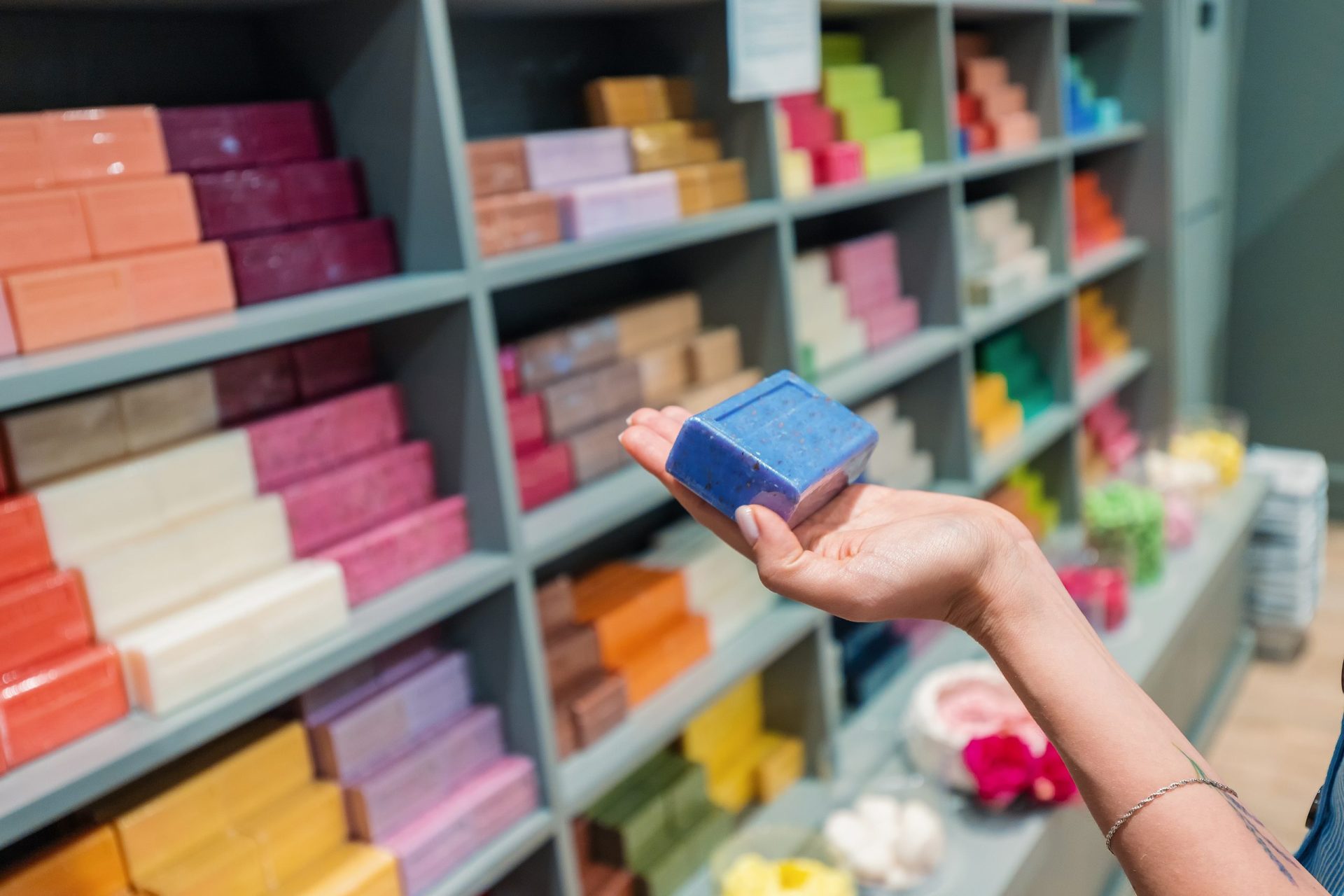
The global solid shampoo bar category is expanding at a compound annual growth rate above 5% and is projected to pass $16 billion before the end of the decade. North America alone accounts for nearly half of that demand, driven by consumers looking for plastic-free, sulfate-free, and travel-ready alternatives to liquid shampoos. That is a massive opportunity for indie brands, salon owners, retailers, and hospitality companies.
But here is the thing most founders learn the hard way: formulating a bar, pressing it, wrapping it, and getting it on shelves involves more moving parts than a liquid product ever does. Coordinating separate vendors for raw materials, compounding, extrusion, filling, labeling, and distribution can stretch timelines from weeks into months. Each handoff introduces another point where something can go wrong, whether that is a mislabeled batch, a delayed shipment of corrugated boxes, or a formula that behaves differently at the ambient temperature of a new facility.
A turnkey manufacturing partner consolidates those steps. One facility. One point of contact. One production timeline. Below are ten specific advantages that brands gain when they bring solid shampoo bar production under a single contract manufacturer’s roof.
Reason 1: Simplified Vendor Management
Fewer Suppliers, Fewer Headaches
When you split your supply chain across multiple providers, you become the project manager. You are chasing raw-material lead times from one company, coordinating mold schedules with another, and negotiating freight with a third. That is fine when you have a procurement team. It is far less fine when you are a two-person startup trying to launch before Q4.
A turnkey partner absorbs that complexity. Raw material sourcing, compounding, pressing or extruding bars, wrapping, boxing, and palletizing all happen within the same operation. The manufacturer owns the timeline and the accountability.
Reduced Supplier Risk
Relying on a single qualified facility also reduces supplier risk. When one vendor in a multi-vendor chain falls behind, every downstream partner is affected. A single-source manufacturer controls the sequence of events and can adjust production schedules internally without waiting for external confirmations.
What This Looks Like in Practice
- One purchase order instead of five or six
- One set of quality documents to review
- Consolidated freight rather than partial shipments from different zip codes
- Faster issue resolution because the same team handles every stage
Reason 2: Consistent Quality From Batch to Batch
Why Consistency Matters More Than You Think
Consumers notice inconsistency before they notice excellence. A bar that lathers differently, feels softer than the last one, or carries a slightly off fragrance note will generate returns and bad reviews faster than a mediocre bar that performs the same way every time.
When formulation, compounding, and pressing happen under the same roof, the production team can monitor variables at every stage. Ambient humidity, ingredient moisture content, extrusion pressure, cooling time, and stability testing protocols all fall under a single quality management system.
GMP and ISO Standards
Under the Modernization of Cosmetics Regulation Act of 2022 (MoCRA), FDA now requires cosmetic manufacturing facilities to register with the agency and to maintain records demonstrating adequate substantiation of safety. The law also authorizes the FDA to establish binding Good Manufacturing Practice regulations for cosmetic facilities, a significant change from the prior voluntary guidance framework in place since 1938.
Working with a GMP-ISO certified facility means those compliance requirements are already built into daily operations. Ingredient traceability, batch records, sanitation protocols, and corrective action procedures are not afterthoughts; they are part of the standard workflow for brands, translating into fewer surprises during audits, retail qualification processes, or customer complaints.
Reason 3: Faster Speed to Market
Compressed Timelines Without Cutting Corners
Perhaps the biggest operational advantage of a turnkey partner is speed. When the same facility that develops your formula also presses, cures, wraps, and ships your finished goods, you eliminate the transit time, re-inspection steps, and communication lags that accumulate across a fragmented supply chain.
In our experience, brands working with multiple vendors typically see 12 to 20 weeks from approved formula to ship-ready inventory. A turnkey arrangement can compress that window to 6 to 10 weeks for established formulas, depending on order volume and packaging lead times.
Speed Does Not Mean Reckless
Faster timelines come from eliminating idle time between stages, not from skipping quality gates. The bars still cure. The labels still get checked. Testing still happens. The difference is that the handoff between departments takes hours, not weeks.
- Formula approval to compounding: days, not weeks
- Compounding to pressing: same facility, same day
- Pressing to wrapping and boxing: continuous flow
- Final inspection to shipment: 24 to 48 hours
Reason 4: Cost Efficiency That Scales With You
Where the Savings Actually Come From
Turnkey pricing is not always cheaper per unit at face value, especially at lower volumes. But the total cost of goods sold drops significantly when you account for the eliminated expenses that multi-vendor setups accumulate:
- No inter-facility freight between a compounder, a presser, and a packager
- No duplicate quality inspections at each receiving dock
- No administrative overhead from managing multiple supplier agreements
- Reduced waste from formula handoff errors or miscommunicated specifications
Scaling Without Starting Over
As your brand grows, a turnkey partner can scale production incrementally. You are not renegotiating contracts with three separate vendors every time you increase volume. A facility with a weekly capacity of 35,000 bars, for example, can accommodate brands ordering 5,000 units at launch and grow with them as retail placements expand.
A Quick Cost Comparison
| Cost Category | Multi-Vendor Setup | Turnkey Setup |
| Freight between production stages | 3 to 5 shipments | Internal transfers only |
| Quality inspections per batch | 3+ (one per vendor) | 1 comprehensive inspection |
| Project management hours per launch | 40 to 60 hours | 10 to 15 hours |
| Average weeks to first shipment | 12 to 20 | 6 to 10 |
| Packaging error rate | Higher (spec miscommunication) | Lower (single team owns specs) |
| Typical minimum order | Varies by vendor | Often standardized |
Reason 5: Formulation Expertise Built Into the Process
Custom Formulation vs. White Label: Know the Difference
Not every manufacturing partner offers the same level of involvement. Private label typically means a brand works with a manufacturer to develop a custom formula, ingredient deck, fragrance profile, and bar shape that are exclusive to that brand. White label, on the other hand, means the brand purchases a pre-existing formula and applies its own label and packaging.
Both models have a place. A salon owner testing the market might start with a white-label conditioning bar to gauge demand before investing in custom development. An established retailer expanding into solid hair care might go straight to a fully custom formula.
What Good Formulation Support Looks Like
A turnkey manufacturing partner with in-house formulation capability can:
- Recommend surfactant systems appropriate for syndet or soap-based bars
- Adjust hardness, lather, and rinse-feel based on target demographics
- Source specialty botanicals, essential oils, or fragrance blends
- Reformulate to meet specific retailer requirements (e.g., sulfate-free, vegan).
- Provide ingredient documentation for FTC labeling compliance
A Note on “Organic” Claims
If your brand makes organic claims, be aware that the USDA National Organic Program (NOP) certification applies to the agricultural ingredients in your formula. Simply using a few organic oils does not make the finished bar “organic.” The claim must be substantiated through proper USDA NOP certification channels. A responsible cosmetic manufacturer should be transparent about what claims your finished bar can and cannot carry.
Reason 6: Regulatory Compliance You Do Not Have to Manage Alone
MoCRA Changed the Landscape
The Modernization of Cosmetics Regulation Act of 2022 represents the most significant expansion of FDA authority over the personal care industry since the original Federal Food, Drug, and Cosmetic Act of 1938. Key requirements that affect shampoo bar brands include:
- Facility registration with FDA (mandatory as of July 1, 2024)
- Product listing, including full ingredient disclosure
- Serious adverse event reporting
- Safety substantiation recordkeeping
- Forthcoming binding GMP regulations
For brands that do not own a production facility, working with a registered, compliant contract manufacturer can satisfy many of these regulatory compliance obligations at the facility level.
FTC Labeling Considerations
The Federal Trade Commission governs advertising and marketing claims for personal care items sold in the United States. Any performance claim on your label or website, such as “strengthens hair” or “reduces breakage,” should be supported by adequate substantiation. Your turnkey partner should be familiar with these boundaries and flag potential issues before they become enforcement problems.
What You Should Ask
- Is the facility registered with the FDA under MoCRA?
- Can they provide certificates of analysis for every batch?
- Do they maintain lot traceability records?
- Are they prepared for potential FDA GMP inspections?
- Will they assist with formatting ingredient declarations for your labels?
Reason 7: Packaging and Labeling Under One Roof
Product Packaging Is More Than a Pretty Wrapper
Product packaging serves three simultaneous purposes: it protects the bar during transit, communicates your brand identity on the shelf, and satisfies legal labeling requirements. When a separate company handles your packaging, the risk of misalignment between the formulation and what appears on the label increases.
A turnkey operation manages the full packaging workflow:
- Wrap style selection (flow wrap, paper band, kraft box, shrink film, naked/compostable)
- Label design coordination with your art team
- Ingredient declaration review against the actual formula batch record
- Barcode and UPC placement
- Case pack configuration and pallet pattern for your distribution channel
Hospitality and Amenity Considerations
Brands selling into the hotel and hospitality space have different packaging needs than those selling through retail or DTC e-commerce. Guest amenity bars require smaller sizes, often different wrapping materials, and sometimes custom embossing with a hotel logo. A single facility that handles all of this avoids the back-and-forth between a soap maker and a separate packing house.
Salon and Professional Channel Requirements
For salon owners developing a branded retail line, packaging must feel premium without being wasteful. Many salons prefer minimalist kraft wrapping or recyclable boxes that align with the eco-conscious positioning that solid bars naturally lend themselves to. Your turnkey partner should have experience with salon-grade presentation and be able to advise on format and material choices.
Reason 8: Flexibility Across Product Lines
More Than Just Shampoos
A good turnkey partner does not limit you to a single product type. The same production infrastructure that presses shampoo bars can often produce:
- Solid conditioners and deep conditioning bars
- Syndet cleansing bars for sensitive skin
- Shave soap and grooming bars
- Exfoliating body bars
- Melt-and-pour decorative soaps
This flexibility is important for brands that plan to expand beyond a single SKU. Launching with a shampoo bar and adding a matching conditioner six months later is much simpler when the same manufacturer already knows your formula preferences, packaging specifications, and shipping requirements.
Private Label and Custom Development Side by Side
Some brands maintain a core line of private label products alongside seasonal or limited-edition custom runs. A turnkey manufacturer with both capabilities can manage these parallel tracks without requiring you to onboard a second vendor.
- Core line: proven formulas, steady replenishment orders
- Limited editions: custom fragrances, seasonal ingredients, co-branded collaborations
- Wholesale programs: larger volume, simplified packaging for B2B distribution
- Bulk orders for refill stations or zero-waste retailers
Reason 9: Sustainability Credentials That Hold Up to Scrutiny
Why “Eco-Friendly” Is Not Enough Anymore
Consumers and retailers are getting smarter about greenwashing. Saying your bars are “eco-friendly” without backing that claim with verifiable practices will not hold up under the scrutiny of a Whole Foods buyer or a beauty editor writing about sustainability.
A turnkey partner with genuine sustainability credentials can help you substantiate your environmental claims:
- Water-free or low-water formulations (solid bars contain little to no water compared to liquid shampoos)
- Minimal or compostable packaging options
- Energy-efficient production equipment
- Ingredient sourcing with documented supply chain transparency
- Waste reduction through controlled batch sizes and minimal inter-facility transit
The Hospitality Angle
Hotels and resorts are under increasing pressure to eliminate single-use plastic toiletries. Solid amenity bars are among the most visible ways a property can demonstrate its environmental commitment. For brands selling into this channel, having a manufacturer that can document the sustainability story, from ingredient sourcing through final shipping, adds credibility when pitching to procurement teams.
What Actual Sustainability Looks Like in Manufacturing
It is not just about the finished bar. Consider these operational factors:
- Does the facility minimize water use in its production process?
- Are production scraps and off-spec bars recycled or repurposed?
- Is the facility making efforts to reduce energy consumption?
- Can the manufacturer provide documentation for retail sustainability audits?
Reason 9.5: A Note on the Difference Between Soap and Syndet
This is a distinction worth making because it affects labeling, marketing, and regulatory classification. Under FDA definitions, true “soap” refers to a product where the cleansing action comes from a combination of alkali salts and fatty acids, and it is marketed solely for cleansing. If a bar makes cosmetic claims (moisturizing, deodorizing) or contains synthetic detergents instead of traditional soap chemistry, it falls under FDA cosmetic regulations.
Syndet bars, short for synthetic detergent bars, are technically not soap. They are formulated with gentle surfactants and often have a lower pH closer to the skin’s natural acidity. Many modern shampoo bars are actually syndet formulations, which means they must comply with FDA cosmetic labeling rules rather than the soap exemption.
This matters because your labeling, your facility registration obligations, and your marketing claims all depend on accurate classification. A knowledgeable manufacturer will make sure you get this right from the start.
The Full Picture: What a Turnkey Hair Care Manufacturing Partner Delivers
Reason 10: A Single Point of Accountability
When something goes wrong, and in manufacturing, something always eventually goes wrong, the most important thing is knowing exactly who to call. With a multi-vendor approach, accountability gets fuzzy. Was the formula off, or did the compounder receive the wrong raw materials? Did the labels peel because of a printing issue or a wrapping machine calibration problem?
A turnkey manufacturer owns the entire process, from incoming raw materials through outgoing pallets. If there is a defect, there is no finger-pointing between the three companies. One team investigates, one team corrects, and one team communicates the resolution.
In Practice, This Means
- A dedicated project manager who knows your brand, your formulas, and your retail calendar
- Consolidated reporting on production status, yield, and ship dates
- Faster root-cause analysis when deviations occur
- Simpler documentation for insurance, retail audits, and quality certifications
Why This Matters for Growing Hair Care Brands
Startups and mid-sized care brands often lack the internal resources to manage complex vendor networks. Their teams are focused on marketing, sales, and brand building, not on chasing down corrugated box suppliers or reconciling conflicting batch records from two different facilities. Offloading that operational burden to a capable contract manufacturer frees up bandwidth for the work that actually drives revenue growth.
For established private-label brand companies expanding into solid formats, a turnkey partner offers a proven playbook. The learning curve on extrusion pressures, cure times, and solid-format stability is not something you want to figure out across multiple disconnected vendors.
What About the Hair Care Products That Do Not Fit the Mold?
Not every hair care formula translates well into a pressed bar format. Liquid leave-in treatments, spray detanglers, and oil serums obviously require different production equipment. But many brands are surprised by how many hair care products can be reformulated as solids:
- Clarifying shampoos for oily scalps
- Color-safe conditioners for treated hair
- Deep conditioning masks in bar form
- Salon-quality treatments with protein and keratin blends
- Scalp care bars with tea tree or peppermint
The key is working with a manufacturer that understands both the chemistry of solid formulations and the performance expectations of professional hair care users. A bar that does not lather, rinse cleanly, or feel comparable to a liquid alternative will not earn repeat purchases, no matter how sustainable its packaging is.
Choosing a Manufacturing Partner: Practical Considerations
Due Diligence Checklist
Before signing with any contract manufacturer, brands should confirm:
- FDA registration status under MoCRA
- Current GMP compliance documentation
- References from existing clients in similar product categories
- Sample turnaround time and cost
- Minimum order quantities and weekly production capacity
- Ingredient sourcing transparency and allergen management protocols
- Packaging capabilities and material options
- Lead times for the first production run and reorders
- Intellectual property protections for custom formulations
- Label hair care labeling support (ingredient declarations, claims review)
Red Flags to Watch For
- Reluctance to share facility certifications or audit results
- No clear process for stability testing or shelf-life documentation
- Inability to explain the difference between soap and syndet bars under FDA rules
- Vague answers about MOQs, pricing tiers, or filling processes
- No system for managing formula revisions or version control
Frequently Asked Questions
What products are good for private labeling?
Solid hair care bars are among the strongest candidates for private labeling because they combine high perceived value with relatively straightforward production logistics. Beyond shampoo bars, conditioners, body bars, shave bars, and facial cleansing bars, all perform well under a private-label model. The format naturally supports branding through custom shapes, embossing, fragrance selection, and packaging design. Hospitality amenities and salon retail programs are two particularly strong distribution channels where branded solid bars command premium pricing and build lasting customer loyalty.
How to choose a private label manufacturer?
Start by confirming that the facility is registered with the FDA and follows current Good Manufacturing Practices. Request certificates of analysis from recent production runs, and ask for client references in your specific product category. Assess whether they offer formulation support or only produce from supplied recipes. Confirm their minimum order quantity and whether it matches your launch budget. Finally, visit the facility if possible, or request a virtual walkthrough. The production environment, equipment condition, and team responsiveness will tell you more than any sales presentation.
What are some examples of private label brands?
Many recognizable retail and salon chains sell private-label personal care lines without consumers realizing it. Major grocery chains, big-box retailers, and hotel groups frequently partner with contract cosmetic manufacturers to produce store-brand shampoos, body washes, and bar soaps. In the solid bar space, boutique brands sold through specialty retailers, subscription boxes, and farmers’ markets are often produced by the same contract manufacturers serving larger accounts. The private-label model allows these businesses to focus on brand identity and distribution while the manufacturer handles formulation and production.
Ready to Launch Your Solid-Hair-Care Line?
Building a brand around solid hair care bars does not have to involve coordinating a half-dozen vendors across three states. MidSolid Press & Pour handles formulation, production, and packaging from a single Colorado facility, so you can focus on the brand-building work that actually moves product off shelves.
Whether you are launching your first own brand SKU, expanding an existing line with solid shampoo bars, or sourcing label hair care bars for a hotel program, get in touch for a production consultation. Start with a conversation, and we will walk you through timelines, MOQs, and formulation options that fit your goals. Reach out to our team today.