


Solid Shampoo and Conditioner
The 10 Labeling Requirements Every Private Label Solid Shampoo Bar Needs in 2026
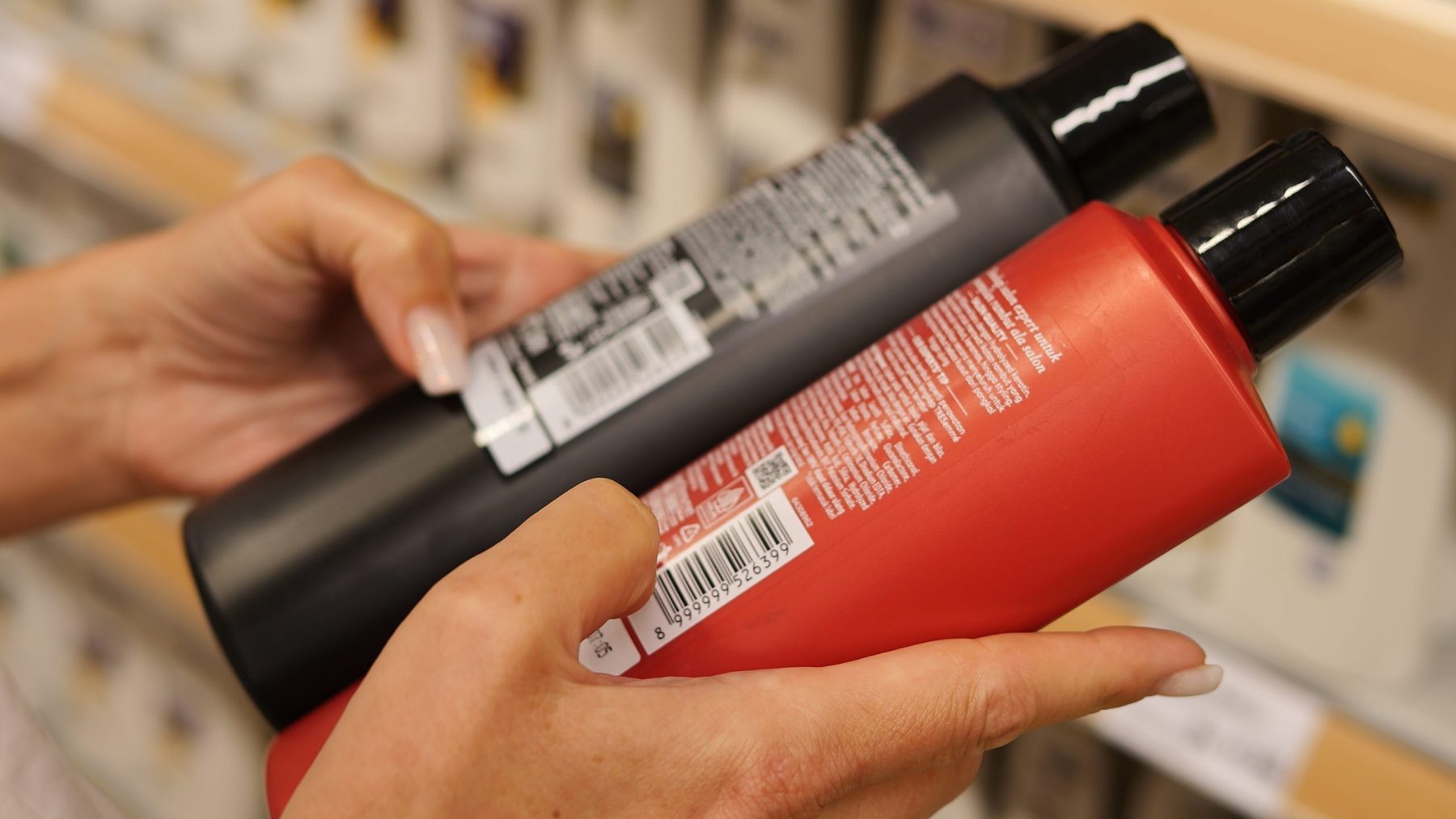
Getting a bar of solid shampoo through US customs, onto a retail shelf, and into a customer’s hand without a misbranding letter is harder than most new brands expect. The artwork has to do real legal work, and the FDA does not pre-approve any of it before you go to market. That responsibility sits squarely with the brand owner and, by extension, the contract manufacturer printing the box.
We talk to founders weekly who are weeks away from launch and still treating the back panel like an afterthought. It is not. Cosmetic labeling is one of the most common reasons shampoo products are detained at the border, and under the Modernization of Cosmetics Regulation Act (MoCRA), the rules have tightened considerably since 2024. So here is the working list our compliance team walks brand owners through before the first labels are printed.
Why Bar Format Changes the Compliance Conversation
A solid shampoo puck looks like a soap. It is shelved like a soap. But under FDA definitions, almost none of them legally are soap. Cleansing products that rely on synthetic detergents are classified as cosmetics regardless of how the marketing describes them. That single distinction pulls your bar out of the narrow soap exemption and into the full sweep of 21 CFR parts 700 to 740.
The practical effect: every requirement that applies to a liquid shampoo also applies to its bar counterpart, and a few additional ones kick in because of the format itself. Tiny outer container, awkward shape, often no inner wrap. The label real estate is brutal, and brands underestimate this every time.
1. Product Identity Statement on the Principal Display Panel
The first rule is the easiest to fumble. A bar of solid shampoo visually resembles a soap, a handcrafted lotion bar, or even a body cleanser, so the consumer needs to be told plainly what it is. The FDA requires a statement of identity using a plain English term on the front of the package, because a shampoo bar, a soap bar, and a lotion bar all look essentially identical on a shelf.
That means a clear product identity line, in English, on the principal display panel. “Cleanser” is too vague. “Hair Bar” is too cute. Word choice matters here because the FDA reads claims literally, and a fanciful name without a generic descriptor will be flagged as misbranded.
2. Net Quantity of Contents in Weight, Not Volume
A cosmetic product in bar form is solid, so the net contents declaration must be expressed as net weight in both US customary and metric units. Solid and semi-solid cosmetics use avoirdupois pound and ounce on the principal display panel, with metric included alongside.
Placement is regulated, too. The weight goes in the bottom 30% of the principal display panel, parallel to the base. Type size is tied to package dimensions, with a 1/8-inch minimum on most retail formats. Smaller PDPs (5 square inches or less) catch a partial waiver, which matters a lot for travel-size or hotel amenity formats.
| Element | Requirement | Common Mistake |
| Product identity | Plain English term on PDP | Fanciful name only |
| Net weight | Bottom 30% of PDP, US + metric | Listing volume instead |
| Ingredient declaration | INCI, descending order | Marketing names like “Vitamin E” |
| Responsible Person | US address, phone, or email | Foreign-only contact |
| Type size | 1/16 inch min on most panels | Squeezed onto curved bar wraps |
| Drug claims | None unless OTC registered | “Treats dandruff” on cosmetic |
3. Ingredient Declaration Using INCI Names
This is where most first-time private label clients get tripped up. The ingredient declaration must list every component in descending order of predominance by weight, using International Nomenclature of Cosmetic Ingredients names, not consumer-facing common names. “Vitamin E” on the back panel is a violation; the correct entry is “Tocopherol” or “Tocopheryl Acetate.”
There is one US-specific quirk worth flagging. Botanicals are an exception. The FDA actually wants the common English name for plant-derived ingredients, with the Latin INCI name in parentheses afterward. So “Lavender Oil (Lavandula Angustifolia Oil)” is correct; using only the Latin form is technically non-compliant. We have caught this on imported artwork more times than we can count.
Below 1% concentration, ingredient identity order becomes flexible. Color additives go at the end, prefaced by “May Contain” or “+/-” when shades vary across a line.
4. Responsible Person Contact Information (MoCRA-Mandated)
Pre-MoCRA, you could get away with just a name and address. Not anymore. The Modernization of Cosmetics Regulation Act now requires a US-based contact point on every cosmetic label, whether that is a physical address, a phone number, or an electronic contact, so consumers can report adverse events directly.
The Responsible Person, defined as the manufacturer, packer, or distributor whose name appears on the label, is legally accountable for product safety substantiation and adverse event reporting. For our private label clients selling into the US from abroad, this typically means appointing a US-based agent and printing their contact details on the information panel.
5. Manufacturer or Distributor Statement
Separate from the Responsible Person field, the label must clearly state who put the product on the market. Brands have flexibility here: it can read “Manufactured by,” “Manufactured for,” or “Distributed by,” followed by the legal business name and physical street address. PO boxes are not acceptable unless the company is also listed in a current city or telephone directory.
When we custom manufacture for a brand under their name, the label says “Manufactured for [Brand]” with the brand’s address. The manufacturer’s address does not need to appear publicly, which is the standard private label arrangement.
6. Warning and Caution Statements (When Triggered)
Most solid shampoo formulas do not require explicit warnings, but a few common scenarios trigger them. Anything aimed at children needs the keep-out-of-reach language. Products containing fragrance compounds with documented sensitization potential should carry a use-discontinuation warning. And if your safety substantiation file is incomplete, the FDA actually mandates the line: “Warning: The safety of this product has not been determined.”
Nobody wants that on their packaging. So the better path is to invest in toxicological assessments before launch, not retrofit a warning afterward.
7. Directions for Safe Use
Liquid shampoos rarely include detailed directions, because the application is intuitive. Solid formats are different. New users genuinely do not always know whether to rub the bar directly on wet hair, work it between the palms first, or slice off pieces. Brief use directions reduce the volume of “this product doesn’t work” returns, which in our experience cuts complaint rates by a meaningful margin in the first 90 days post-launch.
8. Fragrance Allergen Disclosure (The 2026 Wildcard)
Here is the one most clients are not ready for. The FDA has signaled that a fragrance allergen disclosure rule under MoCRA is on its way, with a Notice of Proposed Rulemaking targeted for May 2026. The proposed rule will likely mirror the EU’s 81-allergen list with the same 0.001% leave-on / 0.01% rinse-off thresholds.
Even though the federal rule is not yet final, two factors push smart brands to disclose now. California’s Cosmetic Fragrance and Flavor Ingredient Right to Know Act already requires it for products sold in that state. And export markets, Canada and the EU especially, demand it on the label itself. Building the artwork to the stricter standard means one labels update instead of four.
Ask your fragrance house for an allergen breakdown on every blend you use. Tag those essential oils and aromatic oils in your formulation system so a reformulation does not silently introduce a new allergen onto your back panel.
9. Drug Claims and the Cosmetic Borderline
This is the single biggest labeling trap for indie haircare brands. The moment a bar claims to treat dandruff, stimulate growth, cure scalp conditions, or repair damage at a cellular level, it crosses into OTC drug territory and triggers an entirely different regulatory pathway.
The FDA has an active Import Alert in place for cosmetics labeled with drug claims, which means non-compliant shipments can be detained at the port without an inspection ever happening on the merits.
Acceptable cosmetic claims for a shampoo bar: cleanses, refreshes, adds shine, helps detangle, supports a healthy-looking scalp. Unacceptable without OTC registration: treats, cures, prevents, heals, restores, regrows. The line is enforced literally, not by spirit. We rewrite client copy almost every week to pull back from drug-claim language that crept in during marketing development.
10. Type Size, Legibility, and Format Constraints
Even a perfect set of disclosures fails if nobody can read them. The FDA enforces a minimum text height of 1/16 inch for labeling on most surfaces, and 1/32 inch only when the panel itself is below 12 square inches. Bar formats are notoriously space-constrained, which is exactly why so many labels end up non-compliant in tiny condensed type.
A few practical points we tell clients during artwork review:
- Solid shampoo bars sold without an outer container must carry every required element on the immediate wrap or band itself.
- Contrast matters as much as size. Pale gray on cream fails the legibility test even if the math works.
- All required information must appear in English. Bilingual is fine; English-omitted is not.
- A 1/16-inch minimum sounds small until you try to fit a 30-ingredient INCI list onto a 2-inch wrap.
- Curved or wrap-style packaging needs proofs flat-printed AND mocked up on the actual bar to verify nothing falls into a fold.
- Outer cartons let you breathe; bare-bar formats with paper bands give you almost no margin.
- Consider a peel-back or booklet label for formulas with long ingredient declaration lists.
That last point comes up constantly with bare-bar formats favored by sustainability-focused brands. Less packaging is the brand promise, but the regulators do not care about your carbon goals. The information has to fit somewhere.
Frequently Asked Questions
Is it legal to private label products?
Yes. Private label arrangements are entirely legal in the United States provided the finished product meets all federal and state regulatory requirements. The brand owner becomes the Responsible Person under MoCRA and assumes legal accountability for safety substantiation, adverse event reporting, and label compliance, while the contract manufacturer handles formulation and production. Both parties typically sign agreements clarifying who maintains manufacturing records, batch documentation, and toxicological files. The arrangement scales beautifully for emerging brands but requires real diligence around regulatory paperwork, not just product quality.
Do shampoo bars need a preservative?
It depends on water activity. Anhydrous formulations, meaning no water in the formula, generally do not require traditional broad-spectrum preservation, though antioxidants are still smart to prevent rancidity in the oils. Syndet bars and water-containing pressed formats absolutely need preservation against bacterial and fungal contamination. The decision affects shelf life, regulatory paperwork, and consumer safety. Reputable formulators conduct a preservative efficacy test (PET) regardless of format, because real-world use, wet shower conditions, exposed surfaces, can introduce moisture even into anhydrous bars over time.
How popular are shampoo bars?
The category has grown rapidly since 2020, driven by sustainability-conscious care routines, plastic reduction commitments from major retailers, and the proliferation of refill stations. Once viewed as a niche eco-product, the format has moved into mainstream haircare aisles and hospitality amenity programs. The care segment is increasingly treated as standard rather than novelty, with hotel groups especially sourcing them in volume to replace small plastic bottles. Demand outpaces supply for compliant US-made manufacturing capacity, which is partly why we built ours.
What is considered a private label brand?
A private label brand markets products manufactured by a third-party contract manufacturer under its own name and packaging. The brand owns the recipe, the artwork, and the customer relationship; the manufacturer owns the production process and equipment. This differs from white label, where pre-formulated products are simply rebranded. Custom private label means the formulation itself is exclusive to the brand. Brands across hospitality, indie beauty, retail-store labels, and direct-to-consumer all use this model to launch faster and at a fraction of the customer-acquisition cost of vertical integration.
Build the Label Before the Formula Is Locked
We tell every new client the same thing during their first call: artwork should not be the last step. The smartest brands start their label conversation alongside the formulation conversation, because what goes into the bar dictates what has to go onto the box. A late-stage fragrance swap can rewrite three lines of your information panel, and that means new printing, new dies, and a delayed launch. If you are exploring working with a domestic syndet manufacturer for your next solid haircare bar, our team handles regulatory artwork review as part of the development process.
If you would like a label review, a regulatory walk-through on an existing formulation, or a quote on a new custom program, reach out to schedule a consultation. We have seen most of the things that go wrong, and we would rather catch them before the print run than after the FDA letter.